The Wind and the Sun is a familiar fable about two powerful forces of nature that disagree over which of them is stronger. Rather than continue their argument, they decide to settle the matter through a contest involving a traveller walking along the road.
The challenge seems straightforward: whichever of them can make the traveller remove his cloak will be declared the stronger. The Wind believes that his force will bring a quick victory, but his efforts produce the opposite result. When the Sun takes his turn, the contest ends in a way that neither power can dispute.
Through this simple encounter, the fable explores the difference between forcing someone to act and persuading them through gentleness.
A Disagreement About Strength
One day, the Wind and the Sun began arguing about which of them possessed greater strength.
The Wind was proud of his power. He could rush across open fields, shake the branches of trees and send leaves swirling along the ground. His gusts could disturb the peaceful landscape and make it difficult for people to walk comfortably outdoors.
The Sun possessed a different kind of power. His light spread across the sky, reaching the earth below and bringing warmth to everything exposed to his rays.
Both believed they had good reasons to claim superiority. The Wind could demonstrate his strength through movement and force, while the Sun could make his presence felt through heat and light.
Neither was willing to concede the argument.
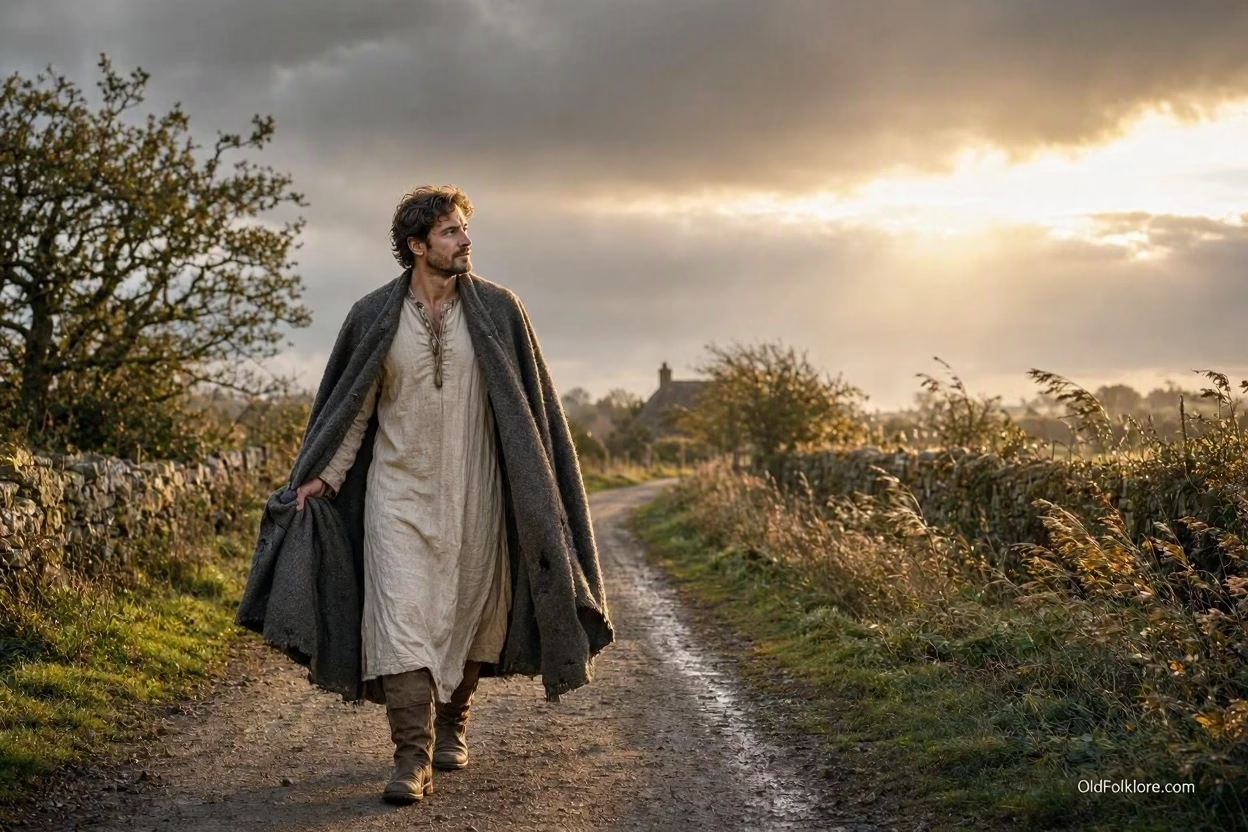
As they continued their dispute, they noticed a traveller coming down the road. He wore a cloak, which covered his body as he walked along his way.
The sight of the traveller gave the two rivals an opportunity to settle their disagreement.
The Challenge
The Sun proposed a contest to determine which of them was stronger.
They would each attempt to make the traveller take off his cloak. Whoever succeeded would be regarded as the stronger of the two.
Explore more stories from our Aesop’s Fables collection.
The rules were clear, and the traveller’s actions would decide the winner. Neither the Wind nor the Sun could simply declare victory; they had to demonstrate their power by achieving the agreed result.
The Wind was given the first opportunity.
Confident that his force would be enough, he prepared to blow against the traveller. He expected that a sufficiently powerful gust would make the man remove his cloak.
The Sun withdrew behind a cloud, leaving the Wind to begin the contest.
The Wind Uses Force
The Wind gathered his strength and began to blow against the traveller.
At first, he may have expected the man to loosen his cloak or remove it to escape the discomfort. Instead, the traveller responded by holding it more tightly around himself.
The Wind increased his efforts.
He blew harder, sending stronger gusts along the road. Yet each time he intensified his attack, the traveller pulled the cloak closer to his body.
The Wind’s force made the man more determined to keep himself covered. Rather than achieve his goal, the Wind encouraged the very behaviour he wanted to prevent.
Still, he continued blowing.
The traveller wrapped himself more closely in his cloak, protecting himself from the cold air. The harder the Wind tried to strip it away, the more securely the man held on.
Eventually, the Wind could do no more. Despite his strength and repeated attempts, he had failed to make the traveller remove his cloak.
He had used all his force but had not achieved the result he wanted.
At last, the Wind gave up in despair.
The Sun Takes His Turn
With the Wind defeated, the Sun emerged from behind the cloud.
He did not attack the traveller with a sudden burst of force. Instead, he shone down upon him in all his glory.
Gradually, the warmth of the Sun’s rays reached the traveller. The weather became too hot for the man to remain comfortable in his cloak.
Unlike the Wind, the Sun did not need to fight against the traveller’s desire to keep himself covered. His warmth changed the conditions that had made the cloak necessary.
As the heat increased, the traveller began to feel uncomfortable wearing the garment.
The Sun continued shining, and the traveller soon found that he could no longer walk comfortably with the cloak on.
He therefore removed it.
The contest was over.
The Sun had achieved in a gentle way what the Wind had failed to accomplish through force. The traveller took off his cloak because the warmth made it unnecessary, not because he had been compelled by a stronger gust.
The Lesson of the Contest
The Wind and the Sun had begun their contest believing that the winner would be the one who could demonstrate greater strength.
The result offered a different understanding of power.
The Wind’s force had made the traveller cling more tightly to his cloak. His efforts had increased the man’s resistance instead of overcoming it.
The Sun, on the other hand, changed the circumstances through warmth. Once the traveller no longer needed the cloak for comfort, he willingly removed it.
The fable does not suggest that force can never achieve anything. Instead, it illustrates how a harsh approach may produce resistance, while gentleness can encourage someone to cooperate.
The Wind tried to control the traveller’s actions directly. The Sun achieved the desired result by making the traveller choose differently.
The contest therefore ends with the Sun declared the stronger, according to the challenge they had agreed upon.
The Wind’s defeat serves as a reminder that power alone does not guarantee success. Sometimes, the most effective approach is not to apply greater pressure but to understand what will encourage the other person to act.
The traveller, meanwhile, simply continues his journey, having unknowingly settled an argument between two great forces of nature.
Explore our complete Historic Folklore & Fairy-Tale Collections archive.
Moral Lesson
The fable teaches that kindness can achieve more than severity. Force may cause resistance, while gentleness and understanding can encourage willing cooperation. When trying to influence others, a calm and considerate approach may succeed where pressure fails.
Knowledge Check
1. Which two forces of nature argued about their strength?
The Wind and the Sun.
2. How did they decide to settle their disagreement?
They agreed that whoever could make a traveller remove his cloak would be considered stronger.
3. What did the Wind do when his turn began?
He blew as hard as he could against the traveller.
4. How did the traveller respond to the Wind’s efforts?
He wrapped his cloak more tightly around himself.
5. How did the Sun win the contest?
The Sun shone warmly upon the traveller until the heat made him remove his cloak.
6. What is the main moral of the fable?
Kindness and gentleness can be more effective than force or severity.
Source
“The Wind and the Sun” appears in The Fables of Aesop, edited by Joseph Jacobs and published in 1894. The collection presents a version of the traditional fable attributed to Aesop.
Explore more Aesop’s Fables
- The Dog and the Shadow: An Aesop Fable
- The Hare and the Tortoise
- The Fox and the Crow
- The Wolf and the Crane: An Aesop Fable