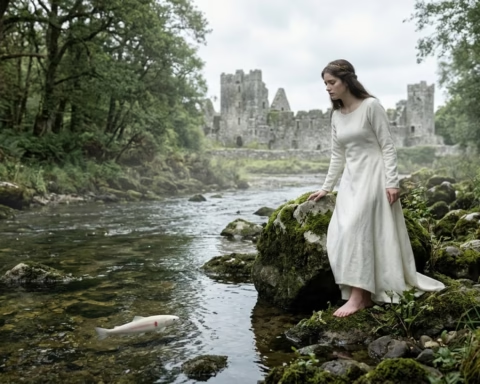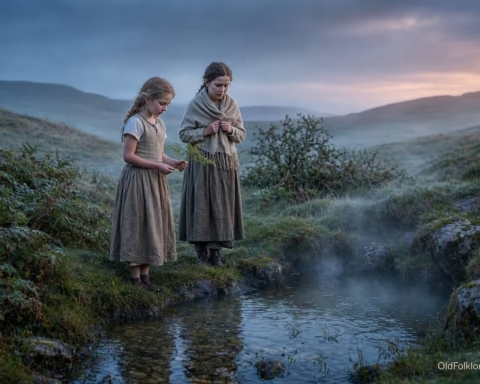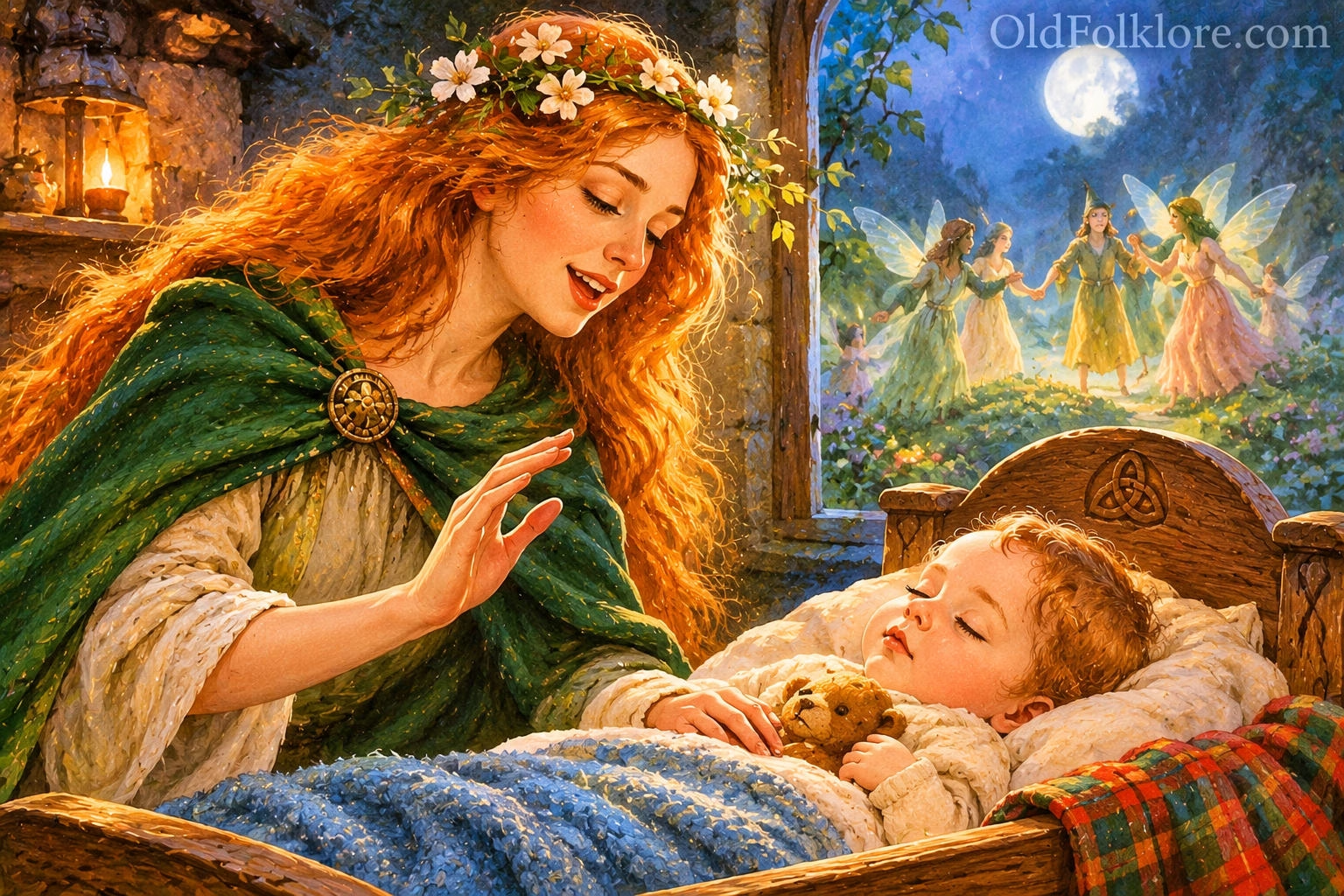
In a quiet woodland, where the branches swayed gently in the breeze and the trees formed a shelter of green leaves, a little human baby lay sleeping in a beautiful golden cradle.
But the child was not being watched over by its mortal mother. A fairy woman had taken the responsibility of caring for the infant. She had wrapped the baby in soft, white fleece and settled herself nearby, ready to guard its peaceful sleep.
As she watched the child, the fairy began to sing a gentle lullaby.
She promised to remain close, keeping watch beneath the trees as the wind moved through their branches. Her repeated soothing words, Shuheen, sho, lulo lo, floated through the woodland like a mother’s familiar song.
Yet the fairy’s lullaby carried a sadness beneath its tenderness.
Explore more stories from our Irish Fairy and Folk Tales collection.
She spoke of mothers who had been left heartbroken and young wives separated from their husbands. When such women mourned their losses, they sometimes believed they were grieving for loved ones who had disappeared. But, according to the fairy, some of those lonely mourners were actually grieving for fairies who had grown old and passed away.
The fairy then offered the child a glimpse of her mysterious homeland.
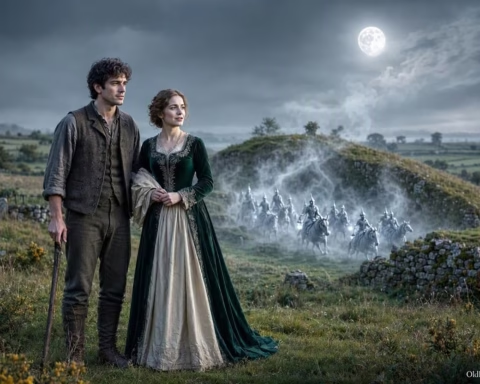
In the bright halls of the fairy kingdom, beautiful figures moved gracefully through their enchanted surroundings. Among them were maidens who had been taken from the mortal world and had become fairy queens. There were also kings, chiefs and members of the supernatural fairy host, known in the poem as the sluagh-shee.
It was a world of extraordinary beauty, but one that existed beyond the ordinary understanding of human beings.
Returning her attention to the baby, the fairy reassured the little one that her affection was genuine. Although she was not the child’s mortal mother, she loved the infant almost as dearly as a human mother would love her own child.
She also spoke proudly of the fairy people’s magnificent horses. Their steeds were swift, powerful and splendid, capable of moving wherever the thunderous march of a great company could be heard.
For a little while longer, the fairy continued her watch, encouraging the baby to rest peacefully.
But the enchanted quiet would not last forever.
Soon, the fairy music would sound, and the child’s sleep would come to an end. The fairy referred to this music as the ceól-sidhe, the music of the fairies, whose mysterious notes belonged to their supernatural world.
Until that moment arrived, she would remain beside the golden cradle, beneath the gently moving branches, singing her tender lullaby.
And once again, her voice rose softly through the trees:
Shuheen, sho, lulo lo.
The fairy watched over the sleeping child, her song blending with the whispering breeze.
Explore our complete Historic Folklore & Fairy-Tale Collections archive.
Moral
Love and tenderness can cross the boundaries of different worlds, while beauty and enchantment may exist alongside sorrow and loss.
Knowledge Check
1. Who is caring for the baby in the poem?
A fairy woman who acts as the child’s nurse.
2. What is the fairy nurse singing?
A gentle lullaby containing the repeated refrain, “Shuheen, sho, lulo lo.”
3. What does the fairy say about grieving mothers and separated wives?
She suggests that some are mourning fairies who have grown old and died rather than only human loved ones.
4. What is the sluagh-shee?
It refers to the fairy host, the supernatural company of fairy beings.
5. What does ceól-sidhe mean?
It means fairy music, as explained in the original poem’s footnote.
Source
Edward Walsh, “The Fairy Nurse,” in Fairy and Folk Tales of the Irish Peasantry, edited and selected by W. B. Yeats, published by The Walter Scott Publishing Co., Ltd., London and Felling-on-Tyne, and New York, under the section “Changelings,” page 51. Digitised by Project Gutenberg as eBook No. 33887:
Explore More Irish Fairy and Folk Tales