A naming ceremony is an occasion for welcoming a new child into the community. Relatives, friends and neighbours gather to celebrate the arrival of a baby, exchange gifts and share food. Such occasions are also opportunities to strengthen relationships through hospitality and generosity.
In this Beba folktale, a mother attends her friend’s naming ceremony with her infant child. Although the celebration provides more than enough food and drink, she becomes so absorbed in enjoying herself that she forgets the child accompanying her. Her journey home brings an extraordinary encounter that changes her understanding of generosity, family and the mysterious world around her.
The Story of the Selfish Mother
A woman once had a young child who was still at the crawling stage. Although the baby depended entirely on her care, she did not always consider his needs when making decisions.
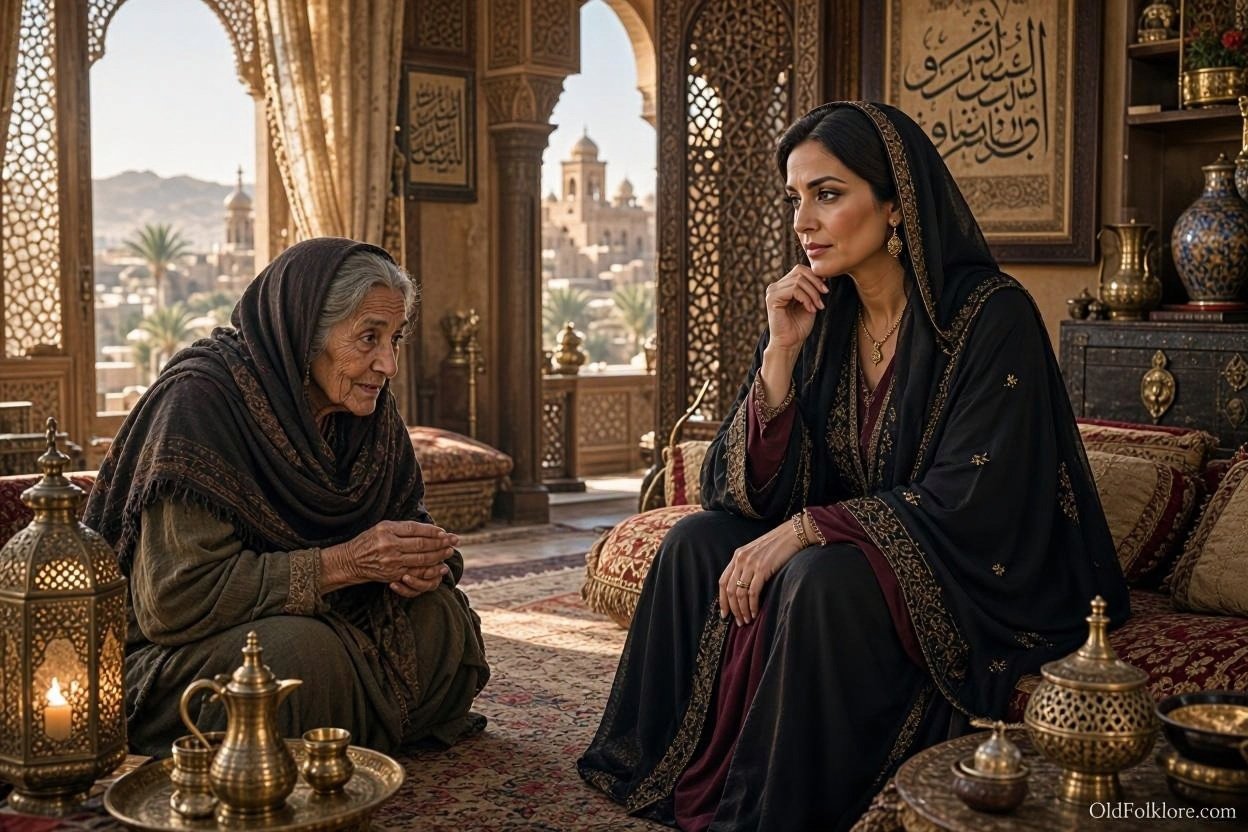
One day, she received an invitation from a close friend who was preparing to celebrate the naming ceremony of her newborn son. The invitation pleased her, and she looked forward to joining the gathering. She knew that the occasion would bring together friends and relatives, providing an opportunity to enjoy good food and spend time with people she knew.
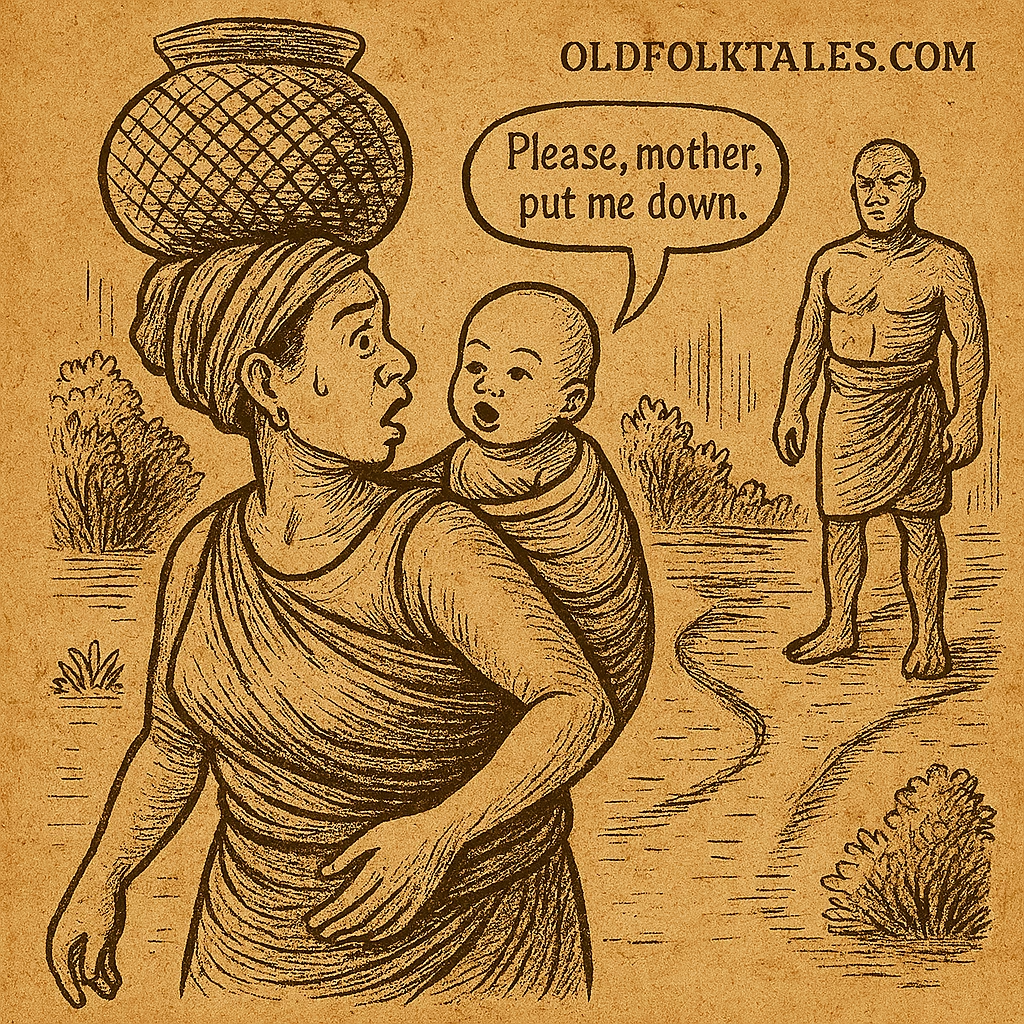
On the morning of the celebration, the woman prepared for the journey. She secured her infant against her back with a wrapper and placed a basket on her head. With everything ready, she left her compound and followed the familiar path towards her friend’s home.
When she arrived, she was warmly received. Other guests had also gathered, and the compound was filled with conversation and excitement. People greeted one another, exchanged pleasantries and settled down to enjoy the occasion.
Explore more stories from our Cameroonian Folktales Collections archive.
The woman found a place among the other guests and loosened the wrapper that held her baby. She settled the child on her lap while she joined the conversations around her.
Before long, food and drinks were served. The guests were offered generous portions, and the celebration continued with eating and drinking. The woman was particularly pleased with the abundance before her. She ate one serving after another and drank freely, enjoying everything that was offered.
Her baby remained beside her, watching as she ate. Yet the woman did not offer him anything. Although she had brought the child along, she became so absorbed in her own enjoyment that she failed to consider sharing even a small portion of the food with him.
She continued eating and drinking while the infant remained without anything from the feast. The gathering was meant to celebrate the arrival of a new child, but the woman showed little concern for the child sitting with her.
Eventually, the celebration came to an end. The guests began preparing to return to their homes, and the woman also made ready for her journey. She secured her baby against her back again, placed her basket on her head and said goodbye to her friend.
She left feeling satisfied after the generous meal. Her journey home initially seemed ordinary, and she continued along the familiar path with the baby resting against her back.
However, when she reached a crossroads, something unexpected happened.
A voice suddenly came from behind her.
“Please, Mother, put me down.”
The woman stopped. She recognised the voice as that of her baby, but what she had heard was impossible. Her child was still an infant who had barely learnt to crawl. He had never spoken to her in such a manner.
She turned around, wondering whether someone else had spoken. Then the voice repeated the request.
Frightened and confused, she carefully loosened the wrapper and placed the child on the ground.
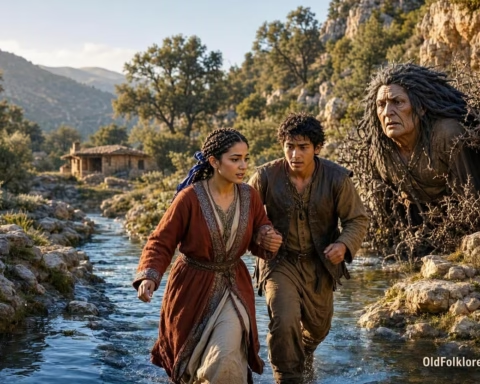
Before her eyes, the infant began to change. The small child grew until a fully grown man stood before her. Although his appearance had changed completely, the woman understood that he was the same child she had carried from home.
The man instructed her to follow him. Too frightened to question what was happening, she obeyed.
He led her along one of the paths branching away from the crossroads. Eventually, they arrived at a large compound. It was unlike the ordinary homes the woman knew, and she soon discovered that the grown man had an entire family there.
As they approached, several children ran towards him.
“Welcome, Father!” they called excitedly.
They embraced him as though he had been away for a long time. The woman watched in amazement. The person she had carried on her back as a baby was being welcomed as the father of these children.
A woman also came out to receive him. She greeted him as her husband, making it clear that he belonged to this household.
The visitor struggled to understand what she was witnessing. Her infant son had apparently been living another life in this mysterious place, where he was a grown man with a wife and children.
The man then turned his attention to welcoming his mother. He arranged for food to be prepared and instructed his household to make a meal for their visitor.
Goats and pigs were slaughtered, and the meat was handed over for cooking. His daughter helped with the preparation of achu, while his wife prepared the soup. Soon, the household was occupied with making the meal.
When everything was ready, the woman was invited to eat. Unlike what had happened at her friend’s naming ceremony, this time she was welcomed with generous hospitality. Food was placed before her, and she was encouraged to enjoy the meal.
She ate until she was satisfied. Her hosts treated her with kindness, and she received an abundance of food without having to ask for it.
After the meal, her son arranged additional gifts for her. He brought out valuable possessions from the storage space known as the nekaa, between the ceiling and the roof. He filled baskets with these belongings and also gave her several goats.
The woman was astonished by the generosity of the household. She had arrived with little understanding of the strange world she had entered, but she was now leaving with gifts she had never expected to receive.
Before they departed, the man gave her an important instruction.
He warned her not to tell anyone what she had witnessed. She was, however, welcome to return whenever she wished.
The woman agreed, and they began the journey back to the crossroads.
When they reached the same place where the transformation had occurred, the grown man changed back into the infant she had carried from home. He became a baby again, and his mother secured him against her back.
She continued towards her village, carrying the child and the gifts she had received.
By the time she arrived home, her unusual possessions attracted attention. Relatives and neighbours noticed the baskets and goats and immediately wanted to know where she had obtained them.
They knew she had attended a naming ceremony, but the gifts she had brought home were far beyond what anyone would normally expect from such an occasion.
They questioned her repeatedly. Who had given her the animals? Where had the valuable possessions come from? Had someone welcomed her into another household and rewarded her with such wealth?
The woman remembered her son’s warning. She did not want to reveal the extraordinary experience she had witnessed, so she avoided answering their questions directly.
Instead, she responded with the proverb, “An elder does not break wind in public.”
Her answer did not satisfy the people around her. They continued pressing her for an explanation, using their own proverbs to suggest that a person who received a gift should identify the giver.
One of them observed that when a man brought home a piece of kola nut, he was expected to tell his family who had given it to him. Another remarked that a river travelling alone often meandered.
Despite their persistence, the woman kept the secret.
She also made a decision about the gifts. Rather than keeping everything for herself, she distributed the possessions among the people in her compound. Men, women and children all received a share.
In this way, the wealth she had brought home became a benefit to the wider household. Although the people remained curious about its origin, she did not disclose what had happened at the crossroads or reveal the mysterious family she had visited.
Her experience had begun with a failure to consider her child’s needs during a celebration. It ended with her receiving hospitality and sharing her unexpected gifts with others.
Explore our complete Africa Folktales collection.
Moral Lesson
The story teaches that generosity should begin with the people closest to us. The mother attended a celebration honouring a newborn child, yet she became so concerned with satisfying herself that she neglected the infant she had brought along. Her behaviour reminds readers that enjoying abundance should not make anyone forget the needs of those who depend on them.
The mysterious transformation also encourages reflection on how little people may understand about the world around them. The mother encountered something beyond her expectations and returned with a secret she was instructed to protect. Her decision to share the gifts shows a change in how she treated the people around her.
Ultimately, the folktale encourages consideration for others, responsible care and generosity. It suggests that receiving kindness should also inspire people to extend kindness to others.
Knowledge Check
Q1: Why did the woman travel to her friend’s home?
A1: She travelled to attend her friend’s newborn son’s naming ceremony.
Q2: What selfish act did the woman commit during the celebration?
A2: She ate and drank without sharing any of the food or drink with her infant.
Q3: What happened when the woman reached the crossroads?
A3: Her baby spoke to her and transformed into a grown man.
Q4: How did the grown man receive the woman in his mysterious household?
A4: He welcomed her, arranged a generous meal and gave her valuable possessions and goats.
Q5: Why did the woman refuse to explain where her gifts came from?
A5: She had promised not to reveal what she had witnessed after her son warned her to keep the experience secret.
Q6: What did the woman do with the gifts when she returned home?
A6: She distributed them among the people in her compound rather than keeping everything for herself.
Source
Makuchi. The Sacred Door and Other Stories: Cameroon Folktales of the Beba. Ohio University Press, 2008, pp. 137–139. The original story is titled “The Greedy Mother.” The collection contains thirty-four Beba folktales retold by Makuchi from stories she heard while growing up in Cameroon.
Explore More Cameroonian Folktales
- Ngoe and Sumediang: The Origin of the Bakossi People
- The Ngondo Water Ceremony
- The Keeper of the Royal Drum of Bafut
- The Great Canoes of the Wouri
- The Leper’s Revenge: A Cameroonian Folktale of Betrayal
- Autan and the Monster: The Boy Who Defeated a Lion
- The Disobedient Girl: A Moloko Fable from Cameroon