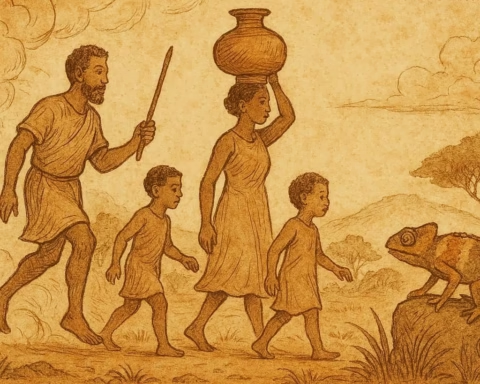
Long ago, in the land of Ananu, there lived a young man named Azö. He was known for his stubbornness and refusal to obey anyone. His parents tried to guide him, but their instructions rarely changed his behaviour. Whether they gave him simple tasks or serious warnings, Azö insisted on doing things his own way.
His disobedience eventually became a burden to his family. Unable to control him, his parents decided to sell him. They hoped that living under another person’s authority would teach him discipline and respect. However, Azö’s character did not change simply because he entered a new household.
The people who bought him soon discovered that he was just as difficult to manage. He ignored instructions, challenged his masters and refused to perform the duties assigned to him. Eventually, they too decided that they could no longer keep him.
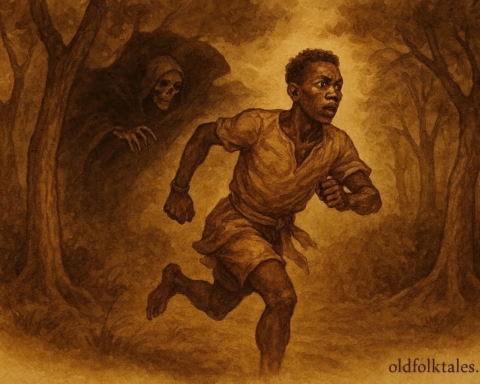
Azö was passed from one owner to another until he was finally sold to Death himself.
Azö Challenges Death
Death accepted Azö into his household, believing that even the most stubborn person would eventually submit to his authority. Unlike ordinary masters, Death expected complete obedience and did not tolerate insults.
He decided to test the young man’s behaviour by giving him a task. Death had a field of millet that needed protection from birds. He instructed Azö to watch over the field and chase away any birds that came to eat the crops.
But Azö refused.
He questioned why he should spend his time driving birds away from a field. To him, the assignment was beneath his dignity, and he had no intention of carrying it out.
Death became angry. He reminded Azö that he was now his servant and had no right to disregard his instructions.
Instead of apologising, Azö mocked him. He made fun of Death’s appearance, referring to his long eyelashes and questioning how someone like him could expect to command others.
Death was furious. He warned Azö that insulting him was dangerous and that those who challenged his authority would suffer the consequences.
Azö remained fearless. He believed Death could not frighten him and continued to behave as though no punishment could touch him.
The disagreement became so serious that Death decided to teach him a lesson.
Seven Days Without Sleep
That night, Death locked Azö inside a dark room. He provided no food and expected the young man to die there.
Death believed that hunger and confinement would finally defeat the stubborn servant. He was certain that Azö would not survive the punishment.
However, Azö understood that his situation was dangerous. He realised that Death intended to take advantage of his weakness, and he became determined to remain alert.
He refused to sleep.
As the hours passed, exhaustion began to trouble him. Hunger weakened his body, and the darkness made the confinement even more difficult. Nevertheless, he continued fighting sleep because he believed closing his eyes would give Death the opportunity to kill him.
One day passed, followed by another. Azö remained awake through the night and into the morning. He endured the same suffering repeatedly, refusing to surrender.
By the seventh day, his strength had almost disappeared. His body was tired, and he had endured hunger and sleeplessness for longer than an ordinary person could reasonably withstand.
Death finally returned, expecting to find him dead.
Instead, Azö was still alive.
Death was astonished and angry. His punishment had failed, and the young man had once again escaped the consequence of his disobedience. He recognised that keeping such a troublesome servant in his household would bring further conflict.
Azö was eventually sold again, continuing the cycle of rejection that had followed him from one household to another.
Azö Returns to His Homeland
After enduring repeated hardship and being passed between different masters, Azö eventually returned to his homeland.
His experiences had left visible marks on his body. He had suffered greatly during his time away, and the people who saw him noticed the condition in which he had returned.
They asked him why his body was covered with sores.
Azö explained that his suffering came from being sold and resold by different masters. Each household had rejected him because of his refusal to obey.
Explore more stories from our Beninese Folktales Collections archive.
His return did not immediately bring him the respect he expected. Even his brothers mocked him. They compared his battered appearance to a mound of earth that had been flattened and worn down.
Their words did not make him abandon his confidence. Azö believed that his experiences had demonstrated something extraordinary about his strength. He had challenged Death, survived the punishment and returned home.
He spoke proudly about his achievement, declaring that he had become greater than Death because even Death had failed to defeat him.
His words revealed the same stubborn pride that had caused trouble throughout his life. Yet his return also marked the beginning of a new conflict, one that would affect the relationship between the earth and the sky.
The Dispute Between Azö and Hevioso
Before Azö’s return, Hevioso had been his friend. During his absence, the people had placed Hevioso in a position of authority within the household.
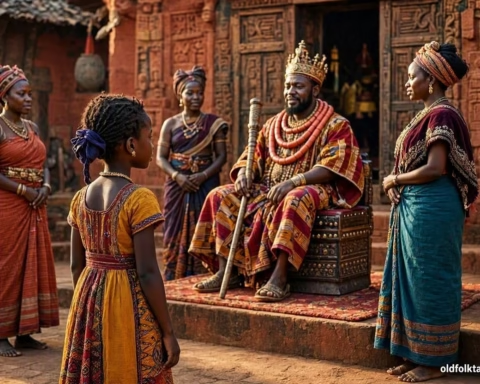
When Azö returned, however, his position changed. He was offered kingship, and he accepted the opportunity to rule.
Hevioso was unwilling to surrender the authority he had acquired. He believed that the position given to him should remain his, while Azö considered his return a reason to reclaim power.
Their disagreement became serious.
Azö believed he had the right to rule, while Hevioso refused to accept that the authority he had received could simply be taken away. The struggle between them was no longer an ordinary disagreement between friends. It concerned the division of power and the responsibilities attached to it.
Eventually, Azö became king. He was identified with Sagbata, the powerful divinity associated with the earth.
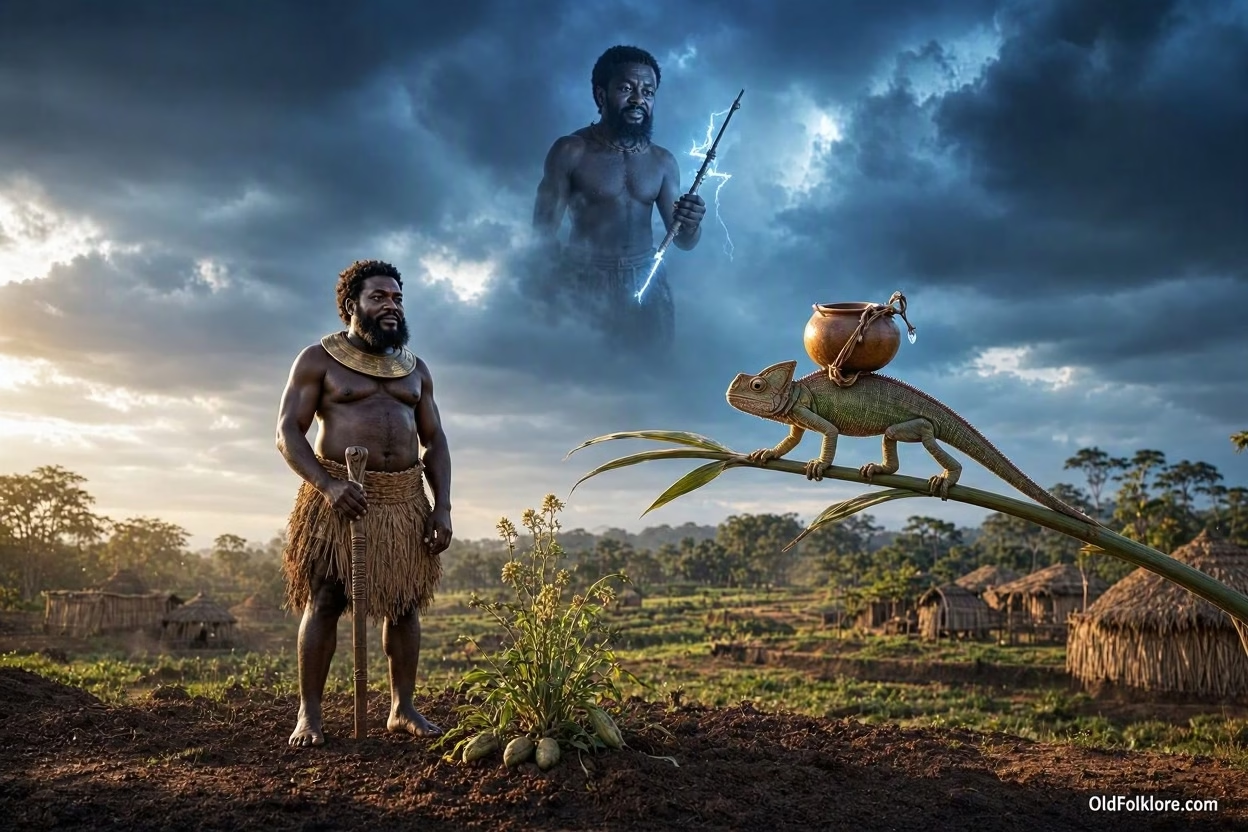
Hevioso, meanwhile, represented the sky and the forces of thunder and lightning. His authority was closely connected with rainfall, storms and the powerful forces that moved across the heavens.
Although Azö had secured his position on earth, he could not command the sky. This difference would soon become important.
The Drought and the Suffering of the People
After becoming king, Sagbata instructed the people to cultivate the fields. The land was prepared, and crops were planted in anticipation of a successful harvest.
The people expected the rains to arrive at the appropriate time. Without rainfall, the crops could not grow, and the work they had completed would be wasted.
But Hevioso was still angry about the struggle for authority.
He withheld the rain.
The clouds failed to bring the water the fields needed. As the dry period continued, the soil became hard, and the crops began to suffer. The people watched their efforts disappear under the harsh conditions.
Animals also struggled to find water. The drought affected the entire community, threatening both human survival and the food supply.
Sagbata understood that the problem was beyond his control. Although he ruled the earth, the rain remained under Hevioso’s authority.
He needed to communicate with his brother and persuade him to release the water.
But approaching the heavens was dangerous. Hevioso possessed the power of thunder and lightning, and anyone who attempted to reach him could be struck down.
Sagbata therefore decided to seek help from the creatures of the earth.
The Search for a Messenger
Sagbata summoned several creatures and asked them to carry a message to Hevioso. Their mission was to explain the suffering caused by the drought and request the return of the rain.
The first messengers attempted to reach the heavens, but Hevioso’s power made the journey extremely dangerous.
An eagle was sent, but Hevioso struck it down with his lightning. A cat also attempted the journey but could not overcome the dangers of the sky.
Their failures showed how difficult it would be to approach the powerful ruler of the heavens.
Sagbata did not abandon his plan. The people, animals and crops were still suffering, and he knew that another messenger had to succeed.
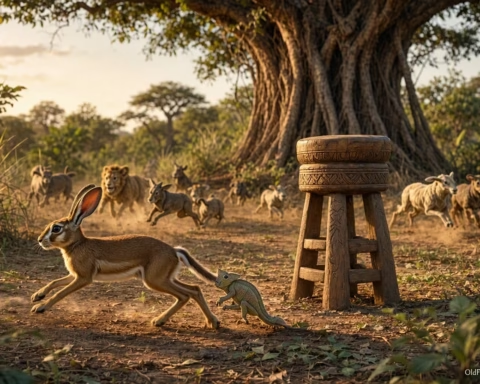
At last, the chameleon was chosen.
The chameleon was associated with the Sun-god Lisa and was known for moving cautiously. Rather than rushing directly towards danger, it could proceed carefully and make use of its surroundings.
Sagbata explained the mission and instructed the creature to approach Hevioso with a message of peace.
The chameleon was to explain that the people were suffering, the animals were dying of thirst and the crops could not survive without water. It was to ask Hevioso to release the rain and restore life to the earth.
The Chameleon Reaches the Heavens
The chameleon began its journey towards the heavens.
Unlike the earlier messengers, it did not rely on speed or strength. It moved cautiously, paying attention to the danger around it.
Hevioso continued to send thunderbolts and lightning across the sky, but the chameleon used the protective threads provided for its journey to shield itself.
Slowly, it made its way towards Hevioso’s dwelling.
When it eventually reached the heavenly gates, the guards questioned its purpose. The chameleon explained that it had come on behalf of Sagbata, the ruler of the earth.
It delivered the message exactly as instructed.
Sagbata’s people were suffering. The crops needed rain, the animals needed water, and the land could no longer endure the drought. The messenger pleaded with Hevioso to reconsider his anger and allow the rain to return.
Hevioso listened.
The message made clear that the conflict between the two rulers had consequences beyond their personal disagreement. The people and animals had become victims of a struggle they had not caused.
Hevioso eventually agreed to release the water.
He gave the chameleon a jar and a calabash containing water to take back to Sagbata. Through this exchange, the messenger helped establish an agreement between the two powers.
However, the agreement also made their respective responsibilities clear. Sagbata would exercise authority over the earth, while Hevioso would retain control over the sky.
Neither would be permitted to interfere with the other’s domain.
The Division of Earth and Sky
The chameleon returned with the message and the water from Hevioso. The agreement brought an end to the immediate crisis and established a clearer relationship between the two divine powers.
Sagbata remained associated with the earth, including the soil and the life sustained by it. Hevioso retained authority over the sky, thunder, lightning and the rains.
The division was important because both powers were necessary for the survival of the world.
The earth could provide fertile soil, but crops could not grow without rain. The sky could release water, but that water was needed by the land and the living creatures below.
Their authority was therefore different but connected.
The story explains why the forces of earth and sky must remain in balance. It also reflects the consequences of allowing personal disputes to interfere with responsibilities that affect an entire community.
From then on, Sagbata was honoured in connection with the earth and its harvests, while Hevioso was revered for his authority over thunder, lightning and rainfall.
The boundary between their domains became an important part of the Dahomean understanding of the natural world.
Explore our complete Africa Folktales collection.
Moral Lesson
The story teaches that authority comes with responsibility and that no individual can control every aspect of life. Sagbata possessed power over the earth, but he depended on Hevioso for rain. Their conflict brought suffering to people, animals and crops. The chameleon’s successful mission demonstrates the importance of patience, wisdom and communication in resolving disagreements. Above all, the tale reminds us that harmony depends on recognising boundaries and respecting the responsibilities of others.
Knowledge Check
1. Who was Azö before becoming associated with Sagbata?
He was a stubborn young man from Ananu who repeatedly refused to obey his parents and masters.
2. Why was Azö sold to Death?
His persistent disobedience caused several masters to reject him, and he was eventually sold to Death.
3. How did Azö survive Death’s punishment?
He remained awake for seven days and nights, refusing to sleep because he feared Death would kill him.
4. Why did Hevioso withhold the rain?
He was angry following his conflict with Azö, who had become king and taken authority that Hevioso believed belonged to him.
5. Which creature successfully carried Sagbata’s message to Hevioso?
The chameleon, associated with the Sun-god Lisa, successfully reached the heavens and delivered the message.
6. What is the central lesson of the story?
The story teaches that boundaries, cooperation and respect for different responsibilities are necessary to maintain harmony between the earth and the sky.
Source
Adapted from Tale 2 in Melville J. and Frances S. Herskovits, Dahomean Narrative: A Cross-Cultural Analysis (1958).
Explore More Beninese Folktales
- Kakpo and the Promise to Loko
- Sogbo Becomes Master of the Universe
- To Each Is Given His Dominion
- Sewanla and the Talking Tail
- The Spider and the Orphan