A good leader is not measured only by the authority he possesses or the number of people who obey his commands. His character is revealed by the way he listens to others, handles disagreements and protects those who cannot defend themselves. In a community where disputes can threaten peace, wisdom and fairness are essential qualities of leadership.
The Cameroonian folktale of the Wise Chief of Isangele celebrates a leader whose judgement earned him the respect of his people. Rather than allowing anger, wealth or social position to determine the outcome of a disagreement, he considered the evidence before him. Two disputes, one involving the ownership of a goat and another concerning a widow’s farmland, demonstrated his ability to look beyond accusations and discover what mattered.
The Chief Whose Wisdom Earned Respect
In Isangele, a community in the Ndian area of Cameroon, there lived a chief whose wisdom was widely respected. People approached him whenever disagreements became difficult to settle. His reputation did not depend on displays of wealth or physical strength. Instead, it rested on his patience, careful judgement and willingness to hear different sides of a dispute.
The chief understood that people who came before him often spoke from anger, fear or personal interest. Their confidence did not necessarily make their claims true, and a person with wealth or influence was not automatically more deserving of justice than someone who had little.
He therefore listened before making decisions. He examined the circumstances surrounding each disagreement and looked for evidence that could help reveal the truth.
His approach became particularly clear when two men appeared before him, each claiming ownership of the same goat.
The Dispute Over the Goat
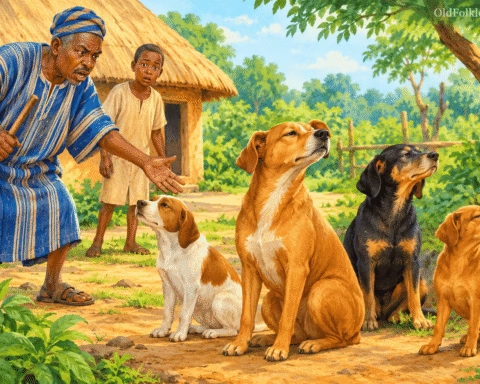
One morning, two men arrived at the chief’s courtyard with a brown goat. Both were angry, and each insisted that the animal belonged to him.
The first man claimed that he had raised the goat from a young kid. He explained that he had fed it, cared for it and provided shelter for it. According to him, the animal had always belonged to his household, and the other man had no right to claim it.
Explore more stories from our Cameroonian Folktales Collections archive.
The second man rejected the accusation. He argued that the goat had lived in his compound for two full seasons. He maintained that he had regularly given it water and taken it out to graze. In his view, the time and care he had devoted to the animal proved that it was his property.
Their disagreement attracted the attention of the villagers. Some supported the first claimant, while others believed the second man’s explanation. As the arguments continued, the courtyard became noisy with competing opinions.
The chief allowed both men to explain their claims. He did not immediately support either side or allow their raised voices to influence his judgement.
When they had finished speaking, he announced that they should return the following day with the food they normally gave the goat.
The instruction surprised the men, but they agreed to follow it.
Letting the Goat Reveal Its Familiar Food
The following day, the two claimants returned with their offerings. Villagers also gathered to see how the chief intended to settle the unusual dispute.
The first man approached the goat with a bundle of fresh cassava leaves. He placed the leaves before the animal, expecting it to eat eagerly.
The goat sniffed the offering but turned away without showing much interest.
The second man then stepped forward. His offering consisted of palm fronds and vegetable peelings. Although these appeared less impressive than the fresh cassava leaves, the goat immediately showed interest. It moved towards the food and began eating eagerly.
The villagers watched the animal’s reaction. The difference between the two offerings gave the chief the evidence he needed to reach a decision.
The goat had shown a clear preference for the food brought by the second man. Its reaction suggested that this was the kind of food it was accustomed to receiving.
The chief therefore accepted the second man’s claim and returned the goat to him.
The first man recognised the result and accepted the judgement. The dispute ended without further argument, and the villagers appreciated the chief’s ability to resolve the matter through observation rather than endless accusations.
The incident demonstrated an important principle: a dispute should not be decided simply by the strength of someone’s voice. Evidence, even when it comes from an unexpected source, can reveal what arguments conceal.
The Widow’s Appeal for Justice
The chief’s concern for fairness was also demonstrated in a dispute involving a poor widow.
One day, a widow came before him in great distress. She explained that a wealthy neighbour had taken possession of the small piece of farmland on which she depended to feed her children.
The land was important to her household. Without it, she would struggle to provide food for her family. She therefore appealed to the chief to help her recover what she believed rightfully belonged to her.
The wealthy man stood beside her and denied that he had done anything wrong. He was confident in his social position and believed that his reputation and resources would make his claim more convincing.
He questioned why the chief should accept the word of a poor widow over that of a respected and prosperous man.
The chief did not allow the difference in their circumstances to determine the case. He understood that wealth did not automatically establish ownership, just as poverty did not make a person’s complaint unworthy of attention.
Rather than deciding the matter from their statements alone, he asked both parties to accompany him to the disputed farmland.
The Land and Its True Value
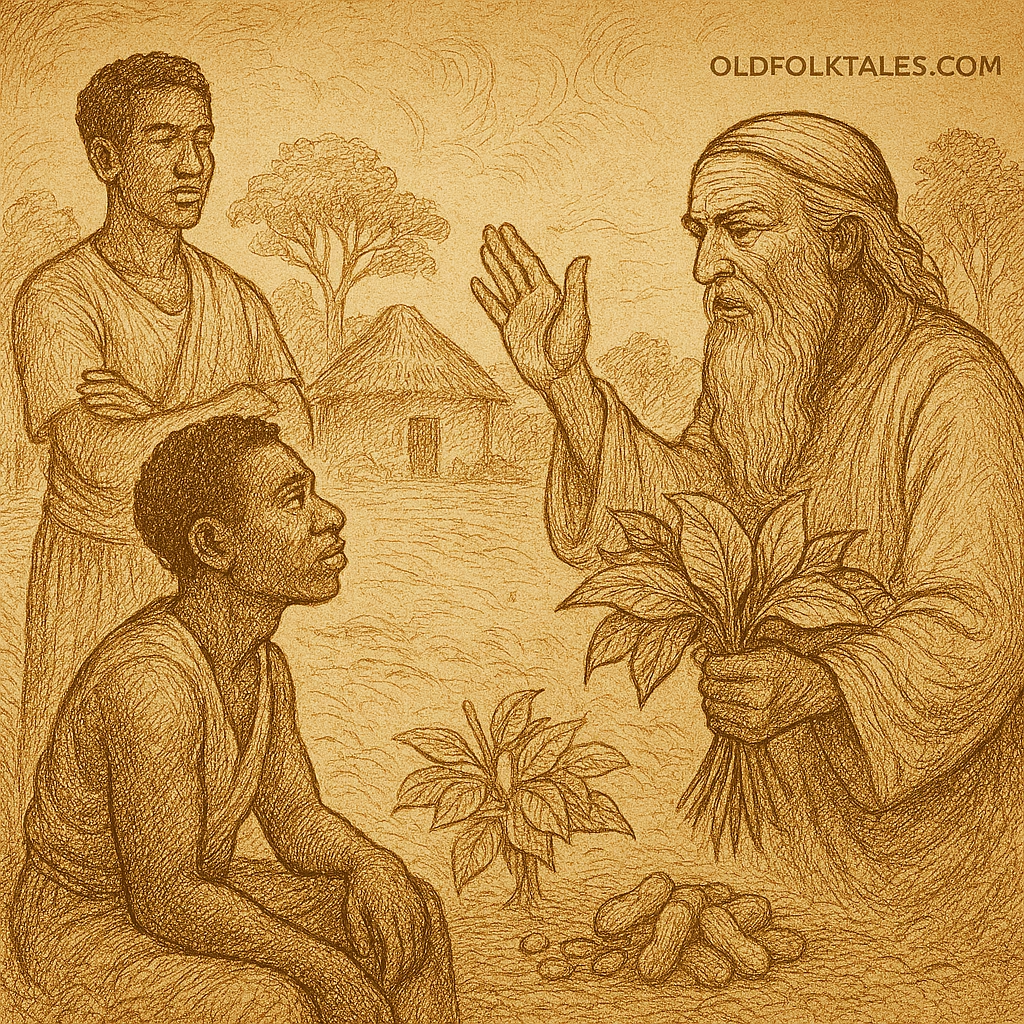
When they reached the field, the chief examined the ground and gathered some soil into his hand. He then asked the widow what crops could be grown there.
She answered without hesitation. She explained that the land was suitable for yams and groundnuts, crops that helped sustain her household.
The chief turned to the wealthy man and asked him the same question.
The man could not provide a meaningful answer. He dismissed the crops as ordinary produce and showed little understanding of what the land could provide.
The widow’s response revealed her familiarity with the field. She understood its usefulness because she depended on it and knew what could be cultivated there.
The chief considered this knowledge when assessing the disagreement. He recognised that the widow had a practical understanding of the land that the wealthy claimant had failed to demonstrate.
He ruled in her favour and ordered that the farmland be returned to her.
The widow was relieved. The decision restored her access to the land that supported her children, while the wealthy man had to accept that his position in the community did not give him the right to take what belonged to someone else.
A Community That Respected Fairness
The two disputes strengthened the chief’s reputation among the people of Isangele. His decisions showed that justice required more than listening to whoever argued most confidently.
In the goat dispute, he looked beyond the competing claims and considered the animal’s familiar feeding habits. In the widow’s case, he paid attention to the difference between someone who understood and depended on the land and someone who dismissed its value.
His approach offered protection to people who might otherwise have been overlooked. The poor could bring their complaints without automatically being treated as less credible than the wealthy. People who disagreed could expect to be heard, while those who made accusations had to face the importance of evidence.
The chief’s wisdom was therefore not simply a matter of cleverness. It was reflected in his willingness to consider each case carefully and make decisions that served fairness.
His example remained a lesson to the community: leadership is most valuable when it protects the rights of others and maintains peace through impartial judgement.
Explore our complete Africa Folktales collection.
Moral Lesson
The Wise Chief of Isangele teaches that justice requires patience, observation and fairness. People may present convincing arguments, but confidence and social position do not always reveal the truth. A responsible leader must examine the evidence rather than allowing anger, wealth or influence to determine the outcome.
The story also reminds us that people should not be judged by their financial circumstances. The widow deserved to be heard despite her poverty, just as the wealthy man was expected to answer for his claim. Fair leadership gives every person an opportunity to seek justice.
Above all, the tale celebrates wisdom that is practical and compassionate. A good leader does not use authority to intimidate others. Instead, he uses it to resolve disagreements, protect vulnerable people and preserve harmony within the community.
Knowledge Check
1. Where does the folktale of the Wise Chief take place?
The story is associated with Isangele in the Ndian area of Cameroon.
2. What was the first dispute brought before the chief?
Two men argued over the ownership of a brown goat, with each claiming to have cared for the animal.
3. How did the chief investigate the goat ownership dispute?
He asked both men to bring the food they normally gave the goat. The animal eagerly ate the palm fronds and vegetable peelings brought by the second man, helping the chief determine whose feeding habits it recognised.
4. What problem did the widow bring before the chief?
She complained that a wealthy neighbour had taken the small farmland on which she depended to provide food for her children.
5. How did the chief assess the farmland dispute?
He asked both parties what crops could grow on the land. The widow identified yams and groundnuts, demonstrating her knowledge of the field, while the wealthy man dismissed its agricultural value.
6. What does the chief’s conduct teach about leadership?
It teaches that good leadership requires patience, impartiality, careful observation and concern for people regardless of their wealth or social position.
Sources
Mbunwe-Samba, Patrick. Shadows in the Firelight: A Selection of Cameroon Folk Tales. Bamenda, Cameroon, 1996. “The Wise Chief of Isangele” (Story 29).
Explore More Cameroonian Folktales
- Ngoe and Sumediang: The Origin of the Bakossi People
- The Ngondo Water Ceremony
- The Keeper of the Royal Drum of Bafut
- The Great Canoes of the Wouri
- The Leper’s Revenge: A Cameroonian Folktale of Betrayal
- Autan and the Monster: The Boy Who Defeated a Lion