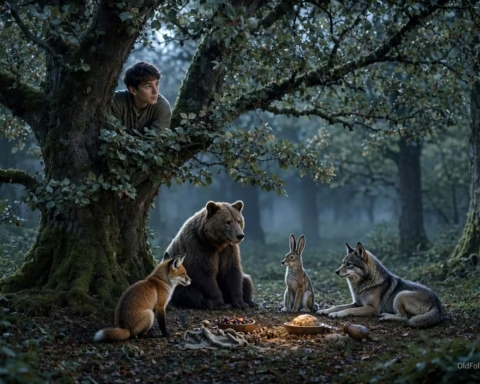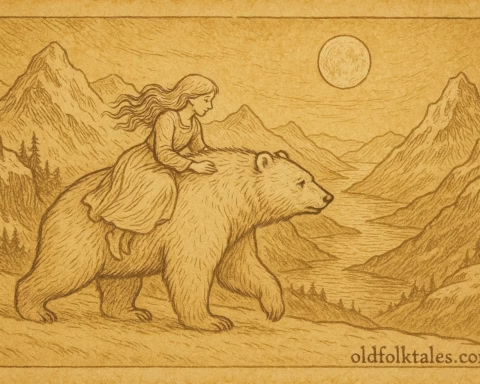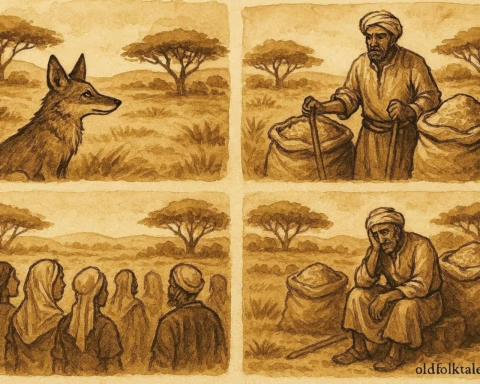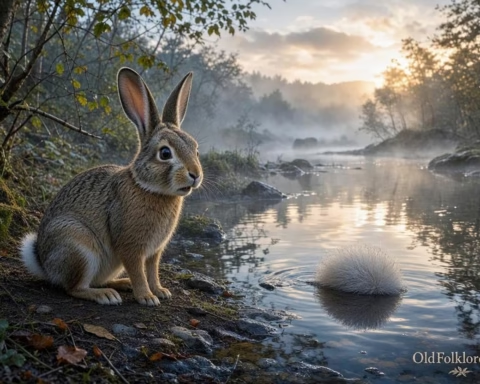
Once upon a time, a woman needed someone to look after her goats, sheep, and cattle. She set out in search of a reliable herdsman, hoping to find someone who could manage her animals and call them together when necessary.
Along the way, she met a bear.
“Where are you going, good woman?” the bear asked.
“I’m looking for a herdsman,” she replied.
“Why don’t you employ me?” suggested the bear.
The woman considered his offer. “Perhaps I might. But can you call a flock? Let me hear how you would do it.”
The bear lifted his head and gave a great growl.
“Ow, ow!”
The woman shook her head.
“No, that will never do. I cannot have you calling my animals like that.”
She continued along the road, leaving the disappointed bear behind.
A little farther on, she encountered a wolf.
Explore more stories from our Asbjørnsen & Moe’s Norwegian Folk Tales collection.
“Where are you going, good woman?” the wolf asked.
“I’m looking for someone to herd my animals,” she answered.
“Why not take me?” the wolf offered.
“Well, perhaps,” said the woman. “But first, let me hear how you call the flock.”
The wolf opened his mouth and let out a loud howl.
“Uh, uh!”
The woman immediately rejected him.
“No, no! You will never do for me.”
She carried on, still hoping to find a suitable herdsman.
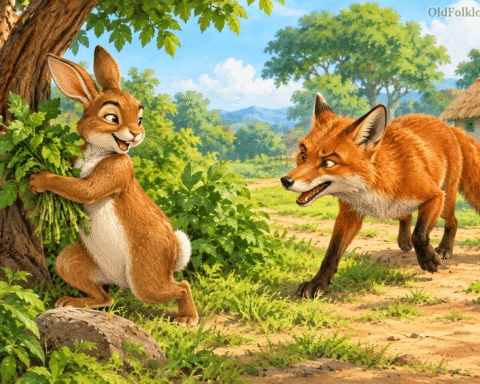
Before long, she came across a fox.
“Where are you going, good woman?” the fox asked pleasantly.
“I’m looking for a herdsman,” she replied.
“Then why not employ me?” said the fox.
The woman looked at him.
“That depends. Can you call my flock? Let me hear.”
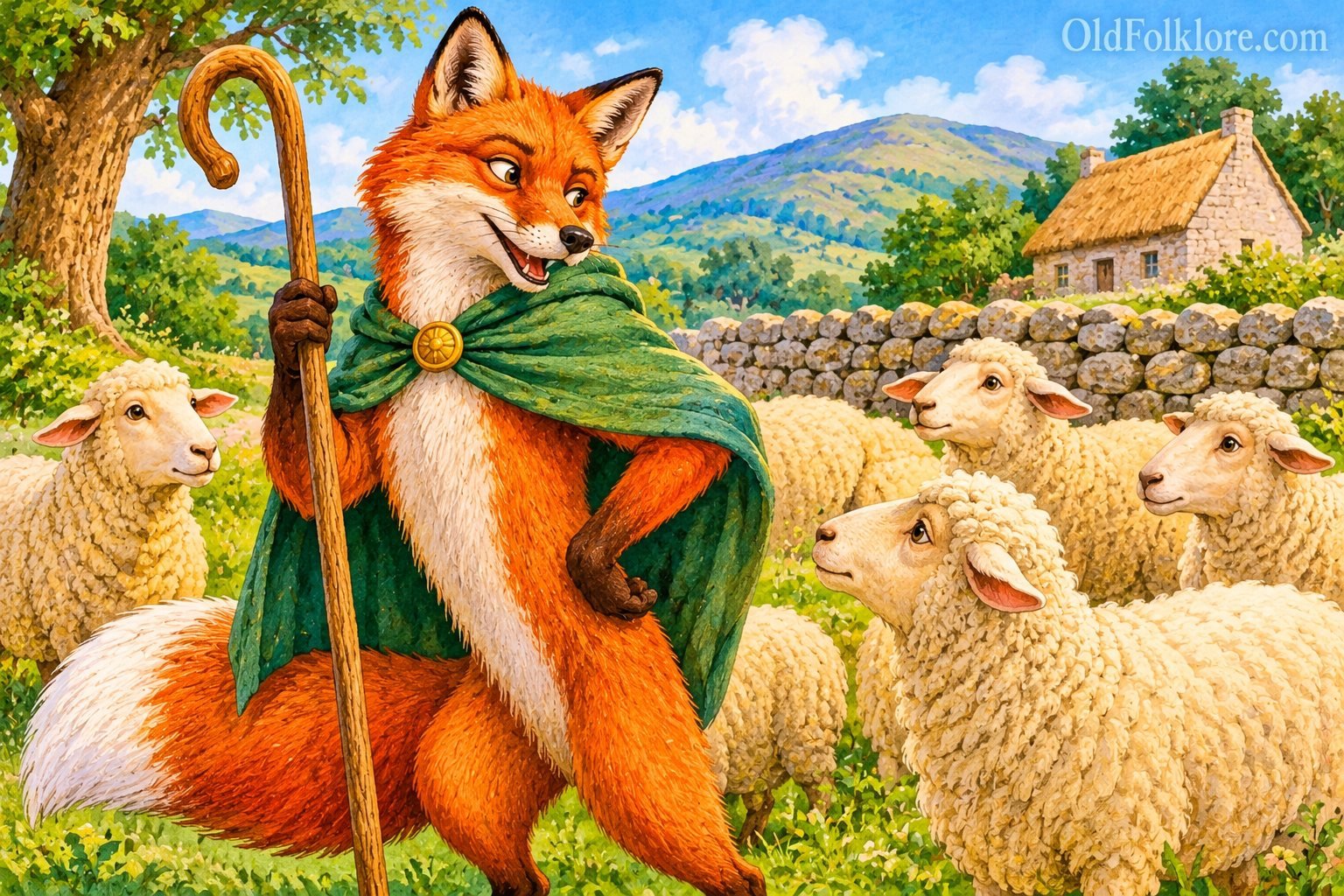
The fox stood proudly and called out in a clear, melodious voice:
“Dil-dal-holom!”
The woman was delighted. Unlike the bear’s growling and the wolf’s howling, the fox’s call sounded just right.
“Yes! You are the one I want. I shall have you for my herdsman.”
And so the fox was given the responsibility of looking after her animals.
But the woman had made a terrible mistake.
On the first day, the fox ate every one of her goats. The following day, he devoured all her sheep. On the third day, he finished off her cattle.
By the time he returned home that evening, there was not a single animal left.
The woman could hardly wait to hear how her herdsman had managed the flock.
“What have you done with all my animals?” she demanded.
The fox answered without the slightest embarrassment.
“Oh, their skulls are in the stream, and their bodies are in the woods.”
The woman was horrified by his reply. She had lost her entire flock, and now she understood the sort of herdsman she had employed.
At the time, however, she was busy churning cream. She decided to leave the fox behind and go outside to see whether she could find anything of her missing animals.
The moment she was gone, the fox crept towards the churn. Seeing the cream, he helped himself to it, eating as much as he could.
When the woman returned, she discovered what he had done. Her anger was greater than ever. Not only had the fox eaten all her goats, sheep, and cattle, but he had also stolen the cream she had been preparing.
She snatched up the little bit that remained and hurled it at the fox as he darted away.
The cream struck the very end of his tail, leaving a white mark.
And that, the tale explains, is why the fox has a white tip on his bushy tail to this very day.
Explore our complete Historic Folklore & Fairy-Tale Collections archive.
Moral
Do not judge someone by appearances or pleasant words alone. A convincing promise is not proof of good character, and trust should be earned through actions.
Knowledge Check
1. Why did the woman reject the bear and the wolf?
Their growling and howling were unsuitable for calling her flock.
2. What made the woman choose the fox?
He demonstrated that he could call the animals in a clear, pleasant voice.
3. What happened to the woman’s livestock?
The fox ate all her goats on the first day, her sheep on the second, and her cattle on the third.
4. How did the fox get the white tip on his tail?
The woman threw the remaining cream at him as he ran away, and some landed on the end of his tail.
5. What kind of traditional story is this?
It is a Norwegian animal folktale that includes an origin explanation for a physical feature of the fox.
Source
The story is adapted from “The Fox as Herdsman,” in Popular Tales from the Norse, collected by Peter Christen Asbjørnsen and Jørgen Moe and translated into English by Sir George Webbe Dasent. The edition consulted is the 1912 New Edition, published in New York by G. P. Putnam’s Sons and in Edinburgh by David Douglas, with a memoir by Arthur Irwin Dasent. The tale appears on printed pages 69–70.
Explore More Asbjørnsen & Moe’s Norwegian Folk Tales