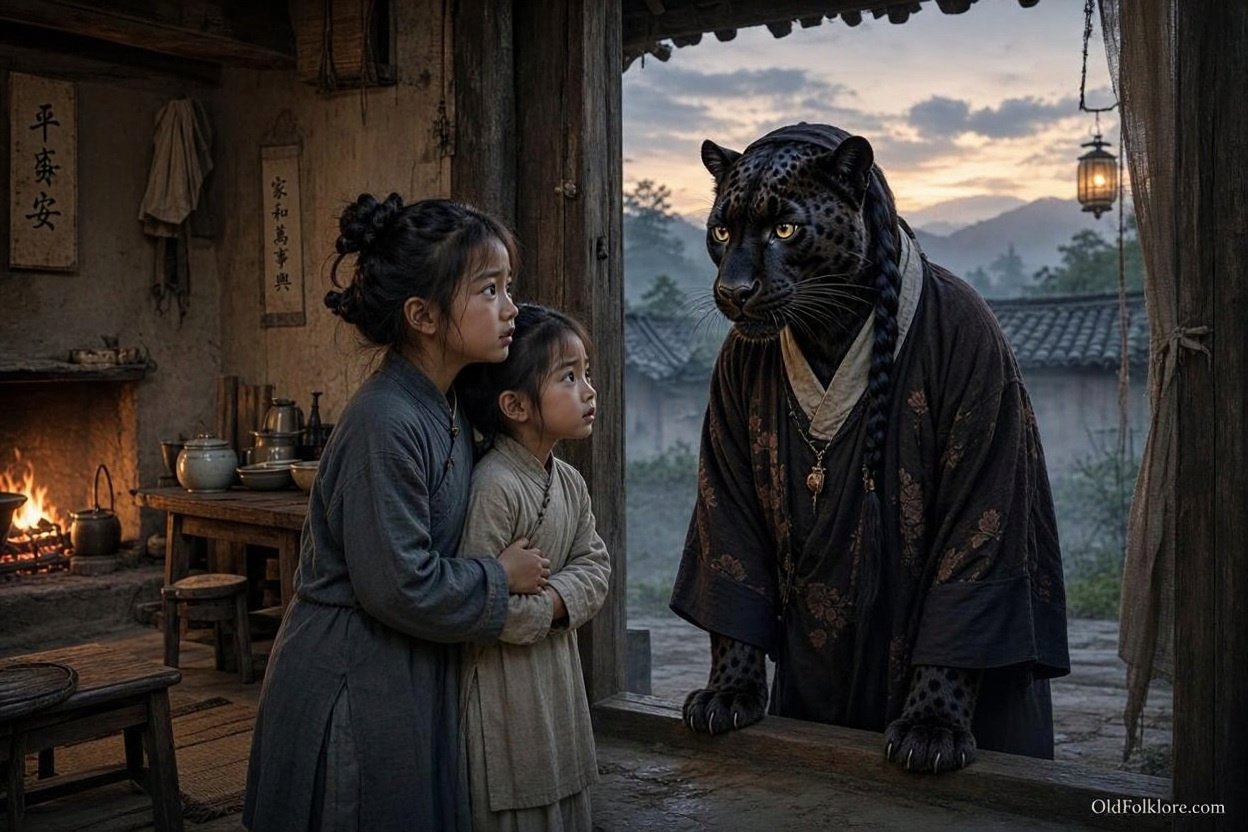
In the old days, marriage could bring together families, wealth and influence, but the wishes of a young woman did not always agree with the plans of her parents. In Okuni, Chief Kekong had a beautiful daughter whose many suitors hoped to gain her hand. Yet she rejected every man who approached her until an unusual stranger appeared and captured her attention.
The stranger seemed handsome, wealthy and suitable for marriage. His appearance concealed a secret that would transform ’Ndere’s life. What began as an unexpected courtship soon became a story of deception, jealousy, betrayal and survival. Through the choices she made, ’Ndere also brought about a change in the food customs of her community.
The Chief’s Beautiful Daughter
Chief Kekong was a wealthy and influential chief of Okuni. He had lived many years earlier, during a time when the people of Okuni refused to eat catfish. They believed the fish belonged to the water ju-ju because of its unusually smooth skin.
The chief had a wife named Nyam and a daughter called ’Ndere. She was admired throughout the community for her beauty, and many chiefs and wealthy men wanted to marry her. Her father’s riches made her an even more desirable bride.
However, ’Ndere was very proud of her appearance. She enjoyed the attention she received and believed highly in her own beauty. Although her parents often encouraged her to choose a husband, she rejected every proposal.
Her refusal frustrated her parents, but they could not persuade her to accept a man she did not want. Meanwhile, another creature in Okuni had developed an interest in her.
A python living in the town wanted to marry ’Ndere. He hoped that marriage would eventually allow him to inherit some of Chief Kekong’s property. Unfortunately, he knew that his natural appearance would make it difficult to win her affection. Without human hands and feet, he believed she would never consider him a suitable husband.
The Python’s Plan to Become Handsome
The python consulted another python about his problem. His companion advised him to travel to a distant country where nobody knew him. There, he should ask different men to lend him the body parts he needed to appear human.
He would need a head, arms, legs, white teeth, a fine face and a nose. However, the adviser told him to keep his own eyes. If he returned to Okuni with these borrowed features, he might appear handsome enough to attract ’Ndere.
The python accepted the advice and travelled to a distant country. He eventually arrived in the territory of a chief named Kaku.
The python introduced himself as a stranger and asked the chief for assistance. When Kaku asked what he needed, the python explained his desire to marry ’Ndere, the daughter of Chief Kekong. He admitted that his lack of hands and feet prevented him from attracting her, so he wanted to borrow the body parts necessary to appear like an ordinary young man.
The python promised to return everything after the marriage.
Unfortunately, he did not know that Chief Kaku had already asked ’Ndere to marry him and had been rejected. Kaku immediately recognised an opportunity to achieve what he had failed to accomplish himself.
Explore more stories from our Ikom Folk Stories collection.
He agreed to help the python, but his kindness concealed a wicked plan. He intended to provide the borrowed body parts, allow the python to win ’Ndere, and then have him killed when he returned the borrowed items. Once the python was dead, Kaku planned to take ’Ndere as his own wife, whether she agreed or not.
The chief summoned his young men. He collected a head from one, arms from another, legs from a third and white teeth from a fourth. He gathered the remaining features until the python had a complete human appearance.
Kaku then gave the python a young boy to accompany him back to Okuni. The following day, the disguised python began his journey.
’Ndere Accepts the Stranger
When the python arrived in Okuni, his new appearance attracted attention. His long neck, small eyes, white teeth and handsome features made him look more attractive than the other young men in the town.
’Ndere saw him and immediately became interested. Unlike the other men who had sought her hand, this stranger appealed to her vanity. She soon developed a strong affection for him.
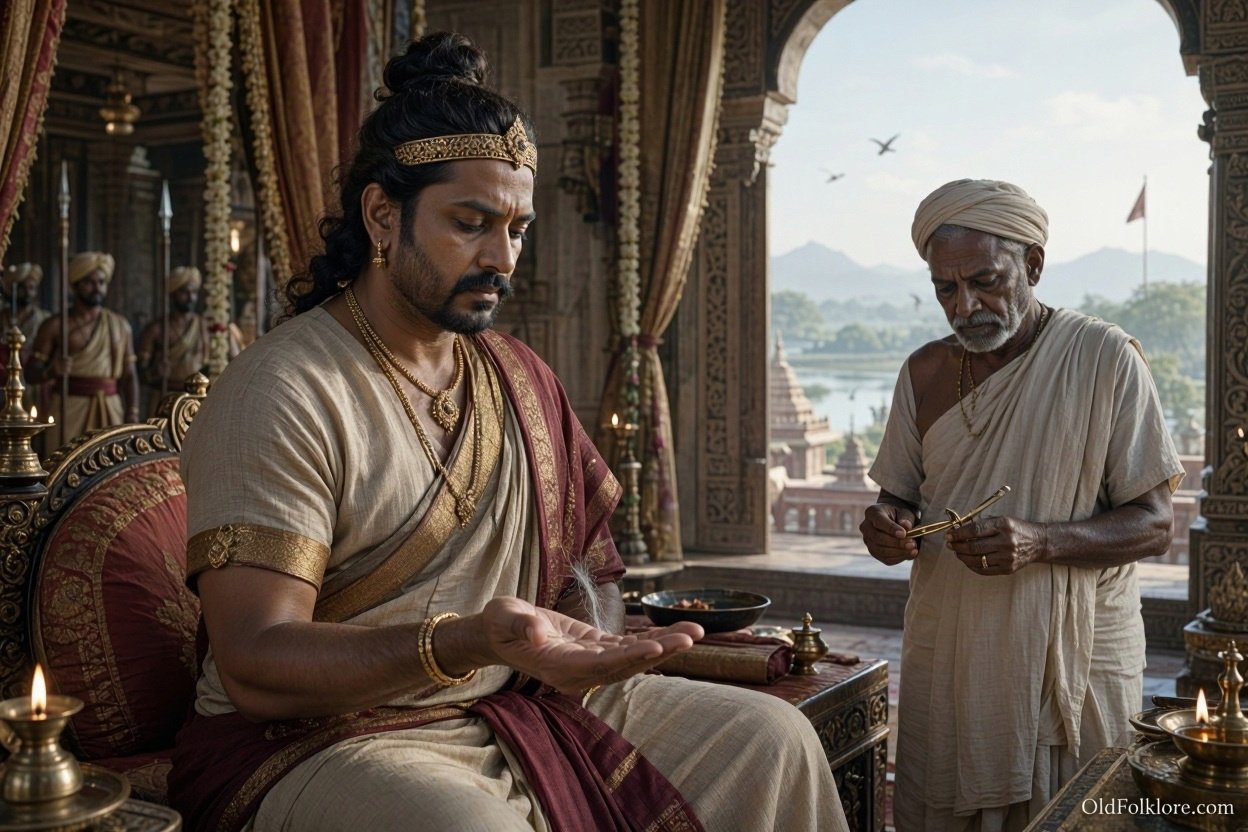
The python approached Chief Kekong and requested permission to marry his daughter. When the chief asked who he was and where he came from, the stranger claimed to be the son of Chief Kaku, who lived in the direction of the rising sun.
Chief Kekong recognised the name. He knew Kaku had previously sought ’Ndere’s hand and had been refused. The chief therefore called for palm wine and offered it to the visitor.
He told the stranger that he would consider the proposal, but reminded him that ’Ndere had already rejected his father. Nevertheless, he explained that he would allow the marriage if his daughter genuinely wanted it.
The visitor received food and accommodation for the night.
Later, after everyone had gone to sleep, Chief Kekong woke his wife and called ’Ndere to speak with them. He explained that the stranger wanted to marry her and asked what she thought about the proposal.
Although ’Ndere had already decided that she wanted to marry him, she did not openly reveal her feelings. Instead, she asked her mother for advice.
Nyam advised her against marrying a stranger. She preferred that her daughter should choose a man from Okuni, where her parents could remain close enough to help her if she became ill or encountered difficulties. If she travelled to another country as the wife of a stranger, they might be unable to protect her.
’Ndere listened and then asked for her father’s opinion.
Chief Kekong also opposed the marriage. He warned that she might be sold into slavery or even killed after leaving Okuni. Although he was a powerful chief in his own town, he would have little authority in Kaku’s territory. He reminded her that she was his only child and that he wanted her to remain close to her family.
His warnings did not change her decision.
’Ndere declared that she had rejected every man her parents had suggested, but she intended to marry this particular stranger. She demanded that they give her to him and allow her to travel to his country. If they refused, she threatened to go into the bush and hang herself.
Her parents tried repeatedly to change her mind, but she remained stubborn. Eventually, they stopped arguing and waited until morning.
When the python approached Chief Kekong the next day for an answer, the chief called his daughter and asked her directly. ’Ndere confirmed that she wanted to marry the stranger and accompany him to his country.
The Marriage and the Python’s True Form
The python sent the young boy who had accompanied him back to Chief Kaku with a request for the marriage dowry. After several days, the boy returned with rods, cloth, camwood and palm oil.
Chief Kekong then gave his daughter to the stranger. Before she left, ’Ndere was rubbed with camwood and oil as part of the marriage preparations.
The original account also records that she underwent circumcision and remained in a room for three days. After recovering sufficiently to walk, she told her husband that she was ready to travel. They set out the following morning, moving slowly along the road.
Their journey lasted two days before they reached Chief Kaku’s town.
Kaku was delighted to see them. He ordered a goat to be killed in front of ’Ndere and sprinkled its blood over her feet. He also arranged a plentiful supply of food for the couple and provided them with a room.
That evening, the chief gathered the men and women for singing and dancing. He supplied palm wine and did everything possible to make ’Ndere feel welcome as the wife of his son.
When the celebrations began, Kaku summoned the python to his house. Before leaving, he asked him to return the borrowed body parts as promised.
The python pleaded for more time. He explained that he and his wife had only just arrived, and it would be shameful for him to return to his natural form while she was still celebrating their marriage. He requested permission to wait until midnight.
Kaku agreed.
The python returned to the house where ’Ndere was staying. At midnight, he went back to the chief and returned the borrowed head, limbs, teeth and other features to their respective owners.
He then returned to his wife in his natural form.
When ’Ndere saw the python crawling towards her, she refused to recognise him as her husband. She had married the handsome man who arrived in Okuni, not the creature now lying before her.
Throughout the remainder of the night, the python tried to convince her that he was the same husband she had chosen. However, she remained awake and refused to accept him.
At daylight, ’Ndere accompanied the python to Chief Kaku and asked whether the creature was truly the chief’s son whom she had married.
Kaku confirmed that the python was his son and that she was now his wife. He also announced that his son would return to Okuni the following day and that she must accompany him.
’Ndere was deeply unhappy with her husband’s appearance. She refused to sit beside him throughout the day. When night came, she went into a separate house and would not allow the python to enter.
Chief Kaku’s Attempt to Steal ’Ndere
Kaku had never intended to allow the python to keep ’Ndere. His original plan was to have him killed after the borrowed body parts were returned.
That night, he ordered four young men to arm themselves with sharp machetes and wait along the road to Okuni. He instructed them to kill the python and bring ’Ndere back to him.
The next morning, the python and his wife ate their early meal and began their journey home. When they reached the first waterway outside the town, where the road divided towards the farms, the python became suspicious.
He remembered that ’Ndere had previously rejected Kaku. He reasoned that the chief might have arranged for them to be attacked so that he could take his wife. Instead of continuing along the main road, he chose the longer farm route, believing it would be safer.
His decision saved his life. The four men waited along the road but never saw the couple pass.
When they returned to Kaku, they reported their failure. The chief guessed that the python had taken the farm road and probably reached Okuni safely.
Kaku was furious, but he could not simply send armed men into Okuni to kill the python and seize ’Ndere. The people of Okuni were powerful, and such an attack could lead to war.
He therefore decided to wait for another opportunity.
Kaku knew that ’Ndere was unhappy with her marriage. He believed she might agree to marry him if the python were removed. He planned to wait until the dry season, when the python would go to work on the farm, and then arrange his death without provoking a conflict between the two countries.
However, he first needed to gain ’Ndere’s cooperation.
He sent two young men to Okuni, instructing them to pretend they came from a distant country. They were to watch the python’s house and deliver a message to ’Ndere. The message advised her to obey her husband until the time came for preparing the new farms. When that time arrived, Kaku promised to have the python killed so that she could marry him.
The two messengers eventually met ’Ndere alone at a spring where she was collecting water. They delivered Kaku’s message.
By then, ’Ndere hated living with the python. She agreed to help and told them that she would gladly marry anyone who could get rid of him. The messengers returned to Kaku and reported her answer.
The Trap at the Farm
When the season for preparing farms arrived, the python took his people into the bush.
The account explains that the pythons did not use machetes or other weapons to clear the land. Instead, they rolled themselves through the grass and then set it alight.
Every morning, ’Ndere prepared food for her husband and followed him towards the farm with calabashes of fufu and soup.
The python did not allow her to approach the actual working area. He feared that the other pythons might become jealous when they saw such a beautiful woman and might kill him to take her for themselves.
He therefore chose a place where she could leave the food. He hung a string of snail shells on sticks and instructed her to shake it whenever she arrived. The sound would alert him, and he would come to collect his meal.
On the first day, ’Ndere followed his instructions. She reached the appointed place, shook the shells and waited. The python soon appeared, collected the calabashes and carried them to the farm, where he and the others were working.
After eating, he returned the empty containers and praised his wife for following his instructions. ’Ndere then returned home.
The same arrangement continued on the second day.
On the third day, ’Ndere told her husband that she wanted to visit the farm and see the others working. The python refused permission.
She then sent word to Chief Kaku that her husband went to the farm every day and explained where he collected his food.
Kaku immediately sent four young men to hide near the place where ’Ndere delivered the meals.
When she arrived, she shook the string of snail shells. The python heard the signal and came towards her.
As soon as he appeared, the four men sprang from their hiding places and attacked him with sticks. ’Ndere ran away, deliberately making it appear that she had no part in the attack.
The men soon killed the python. They cut off his head and tail and carried them back to Chief Kaku. They left the food where ’Ndere had placed it.
The other pythons working on the farm soon noticed that their companion was missing. They searched for him and eventually discovered his dead body near the food, with its head and tail removed.
They could not identify the people responsible. After meeting together, they decided that they would no longer make farms or live in towns. They believed that men had become jealous of them because one of their companions had married ’Ndere.
From that time, according to the story, the pythons withdrew into the bush and began hiding from people.
’Ndere and the Catfish
After the python’s death, ’Ndere appeared before Chief Kaku.
The chief received her calmly. He avoided organising another celebration because he did not want his people to suspect that he had arranged the murder of her husband.
A few days later, however, he secretly sent a message to Chief Kekong. He informed him that he had caused the python to be killed and intended to marry ’Ndere. He also sent a large dowry to the girl’s father.
In Kaku’s country, there was a stream full of catfish, known in the account as Akpambi. The people were afraid of these fish because they believed they were connected with the water ju-ju. Even when they went to the stream to collect water, the fish approached them without fear, yet nobody attempted to catch or eat them.
’Ndere heard about the fish and decided to try them.
She went to the stream carrying a basket. When the catfish saw her, they swam close to the bank. She began singing softly, and more fish gathered around her. Using her basket, she caught two of them and took them home.
She cooked the fish, but the other girls in the house refused to eat any. They believed that anyone who ate catfish would die.
’Ndere was not frightened. She tasted the food and found it delicious. She particularly enjoyed the soup, which she considered very good.
She then took some of the cooked fish to Chief Kaku.
Rather than simply asking him to taste it, she challenged him to prove his affection. She told him that if he truly loved her, he should eat the fish she had prepared. If he refused, she would conclude that he did not care for her and would return to her father in Okuni instead of marrying him.
Kaku explained that his people had never eaten catfish. They believed the fish was part of the water ju-ju and that anyone who consumed it would die.
’Ndere reminded him that her own parents also refused to eat catfish. However, she had already tasted it and remained perfectly well. She argued that if they ate it together and survived until the next sunrise, the people would have no reason to continue fearing it.
The chief finally agreed.
He told her that if they died, they would at least be treated as husband and wife in the spirit world. They then sat together and ate the catfish.
After finishing his portion, Kaku prepared himself for death. He summoned his people and gave instructions about what should be done if he died.
However, the night passed peacefully. When morning came, the chief woke up alive and well. He had suffered no harm from eating the fish.
Delighted by the taste of the meal, he sent ’Ndere back to the stream to catch more. She returned with a larger quantity, cooked it and served it again.
Kaku then gathered his friends and explained what had happened. He told them that he had eaten the catfish and survived, and he encouraged them to try it.
The people tasted the food and discovered that they enjoyed it. When they returned home, they sent their wives to the stream with baskets to catch more.
The story concludes that this was how the custom of women going out with fishing baskets during the dry season to catch catfish began. ’Ndere was credited with introducing the practice.
Explore our complete Historic Folklore & Fairy-Tale Collections archive.
Moral Lessons
The story shows how appearances can conceal the truth. The python gained a handsome human form through borrowed body parts, but his appearance did not change his nature. ’Ndere accepted him because of what she saw, without knowing who he really was.
It also reveals the danger of selfish ambition. The python wanted to marry ’Ndere partly to gain her father’s wealth, while Chief Kaku used deception and violence in his attempt to possess her. Neither man respected her freedom to choose her own future.
The actions of Chief Kaku also demonstrate how jealousy and greed can turn a seemingly helpful person into an enemy. He assisted the python only because he hoped to use him to achieve his own desire.
Finally, ’Ndere’s experience illustrates how questioning inherited fears can lead to change. By eating the catfish and encouraging Kaku to do the same, she helped the people discover that a food they had avoided could be enjoyed safely. Her actions changed an established custom in the community.
Knowledge Check
1. Who were Chief Kekong’s wife and daughter?
Chief Kekong’s wife was Nyam, and his daughter was ’Ndere.
2. Why did the python want to marry ’Ndere?
He wanted to marry her partly because he hoped to inherit her father’s property, but he also needed to appear handsome enough to attract her.
3. How did the python obtain a human appearance?
He travelled to Chief Kaku’s country, where the chief arranged for young men to lend him a head, arms, legs, teeth and other features.
4. Why did Chief Kaku help the python?
Kaku wanted ’Ndere for himself. He planned to have the python killed after the borrowed body parts were returned and then take ’Ndere as his wife.
5. How did Chief Kaku’s men kill the python?
They hid near the place where ’Ndere delivered food to her husband. When she shook the string of snail shells, the python appeared, and the four men attacked him with sticks.
6. How did ’Ndere change the people’s attitude towards catfish?
She caught and cooked catfish, ate it without becoming ill and persuaded Chief Kaku to eat it with her. When he survived, the people also began eating it.
Source
This story is retold from Elphinstone Dayrell’s Ikom Folk Stories from Southern Nigeria (1913), Chapter XXXI, “Chief Kekong’s Daughter ’Ndere Who Married a Python”.
Dayrell recorded and edited the account. The original printed storyteller credit is:
“Told by Ennenni, an Okuni woman.—[E.D., 5.1.11.]”
The notation records Dayrell’s date of collection as 5 January 1911. The story is presented here as a retelling of the historical recorded account, with its original sequence and conclusion preserved.
Digital transcription: Project Gutenberg eBook 70959.
Explore More Ikom Folk Stories
- Igiri and the Mushroom Baby
- How the Spider and Grasshopper Fell Out
- The Greedy Hare and the Tortoise’s Broken Shell
- Chief Alankor and the Giant Frog
- The Twin Child Saved by a Hawk
- Ewa Abagi and the Betrayal at the Cross River
- The Elephant, Hawk and Crab at the Birth of the River
- Why the Head of the Male Goat Smells So Strong