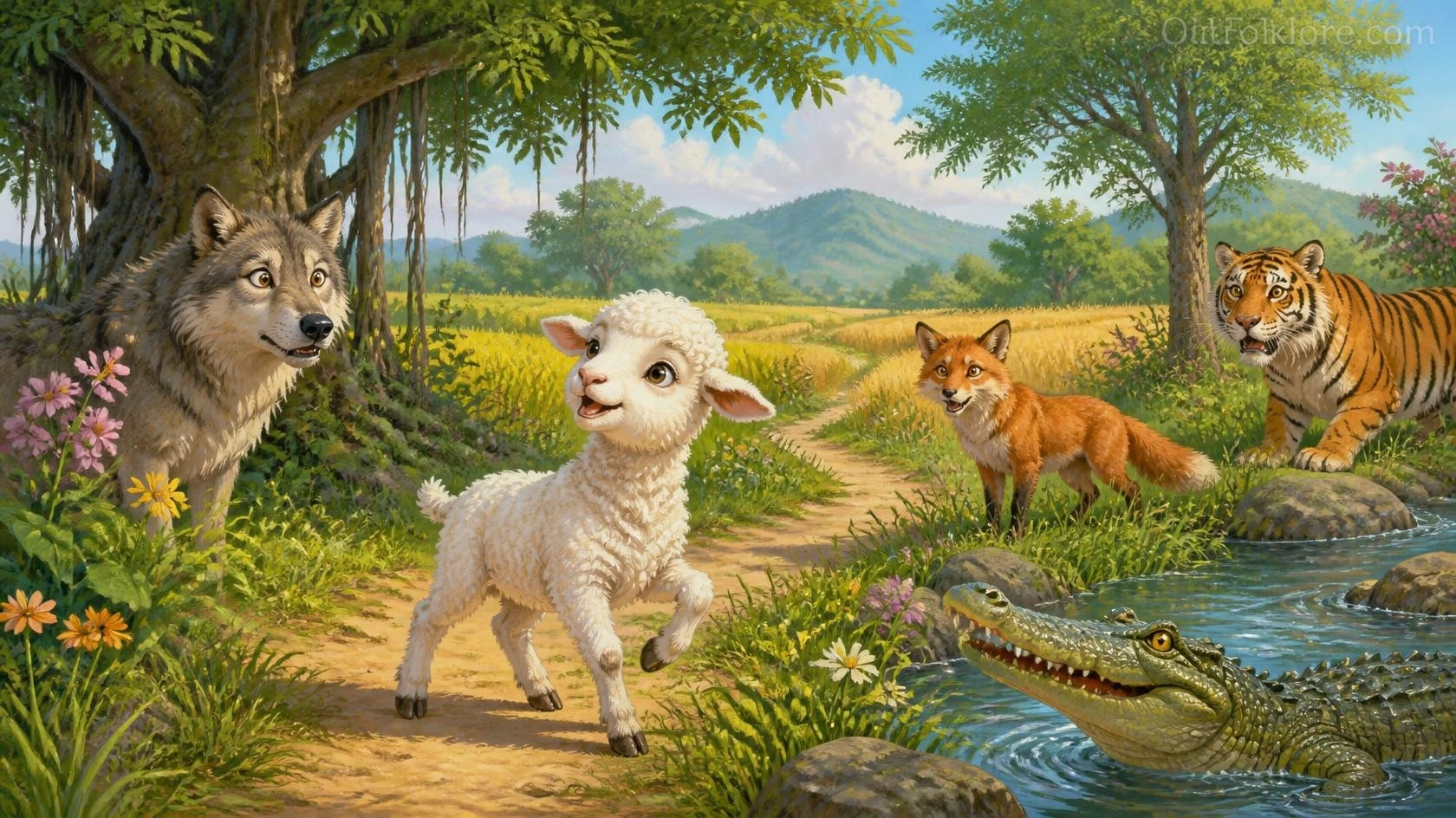
Once upon a time, there lived a small lamb who loved nothing more than skipping about on his unsteady legs. He was cheerful, playful, and always ready for an adventure.
One day, he set out to visit his grandmother. As he travelled, he imagined all the delicious food she might give him and hurried along, delighted by the thought of his visit.
Before long, however, he encountered a Jackal. The hungry animal looked at the young lamb and immediately decided he would make a fine meal.
“Little Lambikin,” called the Jackal, “I am going to eat you!”
Explore more stories from our Joseph Jacobs’ Indian Fairy Tales collection.
But Lambikin did not panic. Instead, he sprang lightly into the air and answered with a little rhyme:
“To Granny’s house I go,
Where I shall fatter grow,
Then you can eat me so.”
The Jackal considered the proposal. A plumper lamb would surely make a better meal than a thin one. Thinking that he had nothing to lose by waiting, he allowed Lambikin to continue on his way.
The little lamb skipped happily onward, pleased that his words had saved him.
One Predator After Another
His journey was far from over.
Soon, a Vulture spotted him and, seeing an easy meal, announced that he intended to eat him. Once again, Lambikin responded with his promise to visit Granny, grow fatter, and return to be eaten.
The Vulture found the reasoning convincing and let him go.
The lamb continued along the road, repeating his little performance whenever another hungry creature appeared. A Tiger threatened him, followed by a Wolf, a Dog, and an Eagle. Each wanted to devour the tender young traveller, and each heard the same explanation.
Lambikin would visit his grandmother first, grow plump on her good food, and then make himself available as a more satisfying meal.
Remarkably, the animals accepted his bargain. They all imagined that patience would reward them with a better feast.
At last, Lambikin reached his grandmother’s home.
Seven Days in the Corn Bin
“Granny, dear!” he exclaimed. “I have promised that I shall grow very fat before the animals eat me. Since a promise ought to be kept, please put me in the corn bin straight away!”
His grandmother was pleased by what she understood to be his sense of responsibility. Without suspecting a trick, she placed him in the corn bin.
There Lambikin remained for seven whole days. He ate and ate until his little body grew so round that walking became a struggle. At the end of the week, Granny decided that he had grown fat enough and should return home.
But Lambikin had another concern. If he travelled back in his plump condition, surely the hungry animals would catch him before he reached safety.
He quickly devised a new plan.
“Granny,” he said, “I cannot go back like this. Someone will eat me on the way! Why not make a little drum from the skin of my little brother who died? Put the wool inside, and I can curl up in it and roll along. I am as round and tight as a drum already!”
Granny agreed. She fashioned a small drum from the skin, lined it with wool, and made a snug little hiding place inside.
Lambikin curled himself into the soft interior, concealed from sight, and set off down the road. Rolling along merrily, he was delighted with his clever disguise.
The Drum That Fooled the Animals
Before long, Lambikin met the Eagle again.
“Drumikin! Drumikin!” called the bird. “Have you seen Lambikin?”
From inside the drum, Lambikin answered in a cheerful voice, claiming that Lambikin had fallen into a fire and suggesting that the Eagle would meet the same fate if it pursued the drum.
The Eagle was disappointed to hear that its hoped-for meal was gone. It sighed and allowed the strange little drum to continue.
Lambikin rolled onward, singing a playful rhythm as he travelled. One by one, the other animals encountered him and asked the same question: had he seen Lambikin?
Each time, the hidden lamb gave the same misleading answer. The Tiger, the Wolf, the Dog, and the other creatures all believed that Lambikin had disappeared and that their chance of eating him had been lost.
They could only regret having let their promised meal escape.
Lambikin, meanwhile, grew more confident with every successful encounter. His disguise had carried him past all the animals who had once threatened him.
But one predator remained.
The Jackal Recognises the Voice
At last, the Jackal came limping down the road. Although he appeared weary, his mind remained sharp. When he saw the little drum, he called out:
“Drumikin! Drumikin! Have you seen Lambikin?”
Safely tucked inside, Lambikin began his familiar reply. He repeated his claim that Lambikin had fallen into a fire and started his cheerful drum-song.
He had scarcely begun when the Jackal stopped.
Something about that voice sounded familiar. The Jackal recognised it immediately. This was no ordinary drum. The creature inside was the very lamb who had persuaded him to wait for a fatter meal.
“Ah!” cried the Jackal. “So you have turned yourself inside out, have you? Come out of there!”
The Jackal tore open the little drum and discovered Lambikin hidden within. This time, the lamb’s cleverness could not save him.
The Jackal gobbled him up, bringing the little lamb’s adventure to an abrupt end.
And so Lambikin, who had deceived every other animal along the road, finally met his match in the one predator who remembered him well enough to see through his disguise.
Explore our complete Historic Folklore & Fairy-Tale Collections archive.
Moral
The story suggests that cleverness can help someone escape danger, but relying too heavily on deception may not guarantee lasting safety. It also illustrates how greed can cloud judgment: the predators repeatedly allow Lambikin to escape because they expect a better meal later.
A further lesson lies in the Jackal’s final success. Appearances can mislead, but careful attention and recognition can expose a trick.
Knowledge Check
1. Why does Lambikin persuade the animals to let him go?
He promises to visit his grandmother, grow fatter, and return to become a more satisfying meal.
2. What does Lambikin’s grandmother do to help him?
She feeds him in the corn bin for seven days and makes a little drum from the skin of his deceased younger brother, with wool inside, so Lambikin can hide within it.
3. Why do the other animals fail to recognise Lambikin?
They cannot see the lamb inside the drum and accept his misleading answers when they ask where he has gone.
4. How does the Jackal discover the trick?
He recognises Lambikin’s voice as the lamb begins to speak from inside the drum.
5. What makes the ending different from the earlier encounters?
The Jackal does not accept the deception. His recognition exposes Lambikin’s disguise, and he eats the lamb.
6. What narrative techniques make the tale memorable?
Repetition, a recurring rhyme, escalating encounters, animal characters, and a surprise reversal at the ending.
Source
The source for this retelling is “The Lambikin,” included in Joseph Jacobs’s Indian Fairy Tales, published in London by David Nutted in 1892. The story is available in the digital edition of the collection through Project Gutenberg, eBook No. 7128, at https://www.gutenberg.org/ebooks/7128. The corresponding Notes and References should also be consulted to verify any additional information about the tale’s origins and source history.