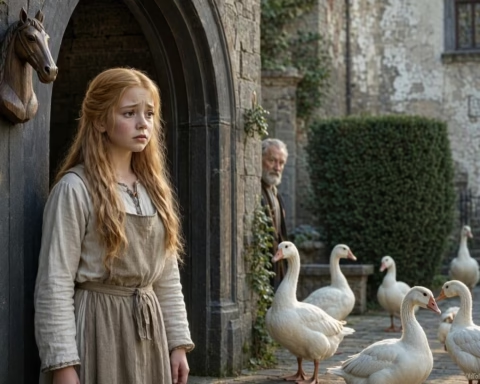
Once upon a time, there lived a good man with two children. His daughter, born to his first wife, was as white as milk, with cherry-red lips and golden hair so long that it reached the ground. Her younger brother loved her dearly, but their stepmother, the man’s second wife, hated the girl because of her beauty.
One day, the stepmother gave the girl some money and sent her to the grocer to buy a pound of candles. The girl went obediently, bought the candles, and started home. On the way, she reached a stile. As she set the candles down to climb over, a dog suddenly appeared, seized them, and ran away.
The girl returned to the grocer and bought another bunch. But when she reached the stile and put the candles down again, the same thing happened. The dog took them once more.
Explore more stories from our Joseph Jacobs’ Indian Fairy Tales collection.
She tried a third time, hoping to complete her errand. Yet the dog stole the candles again. With all the money spent and nothing to take home, the little girl returned to her stepmother in tears.
The stepmother was angry, but she concealed her feelings and pretended that the loss did not matter. Instead, she invited the girl to rest her head on her lap while she combed her hair.
The child obeyed. As the woman combed the girl’s golden locks, the hair flowed over her knees and tumbled all the way to the ground. Rather than admire its beauty, the stepmother grew even more hateful. She could not bear to look at the lovely child.
She told the girl to fetch a piece of wood because she could not part her hair on her knee. The girl brought it. Then the woman asked her to fetch an axe because a comb would not do. The child obeyed again, trusting the woman who had called her close.
At last, the stepmother told the girl to lay her head upon the block of wood so that she could part her hair properly.
Without suspicion, the little girl rested her golden head on the block. In an instant, the woman brought down the axe and killed her. She wiped the blade clean and laughed.
The wicked stepmother then took the child’s heart and liver, cooked them, and served them for supper. When the girl’s father tasted the food, he thought it strangely flavoured. The stepmother offered some to the little boy, but he refused to eat. Although she tried to force him, he would not take a bite.
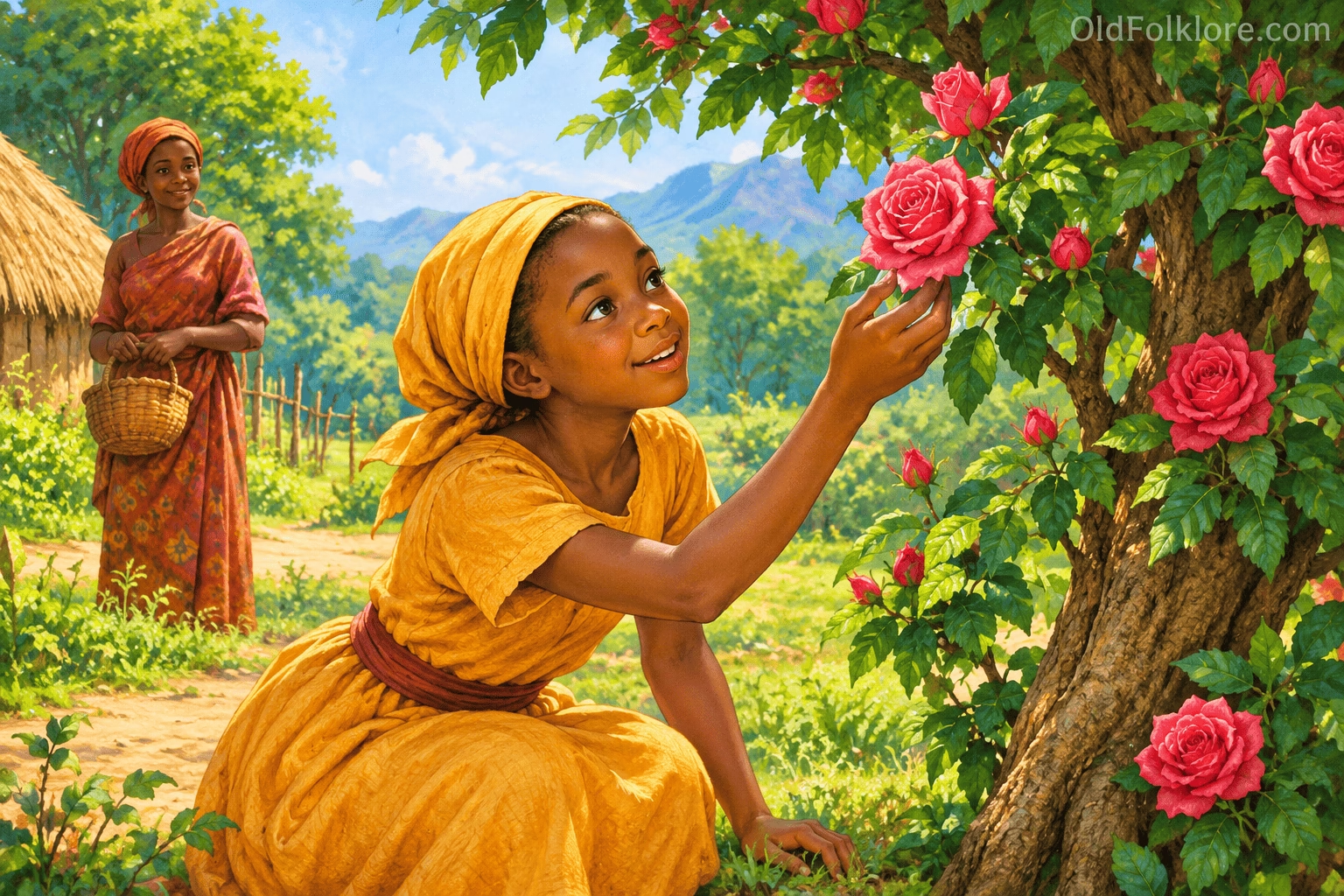
Instead, the boy ran into the garden, gathered up his beloved sister, placed her in a box, and buried it beneath a rose-tree. His grief was so great that he returned to the tree every day to weep. His tears fell upon the earth covering the box, while the rose-tree stood above the place where his sister lay.
Then spring came, and the rose-tree burst into flower.
Among its blossoms appeared a beautiful white bird. It sang with a voice so sweet that it seemed to come from heaven. When it flew away, it carried the little girl’s terrible story into the world.
The bird first visited a cobbler’s shop and perched in a nearby tree. There, it sang:
My wicked mother slew me,
My dear father ate me,
My little brother whom I love
Sits below, and I sing above.
Stick, stock, stone dead.
The shoemaker was captivated by the song and begged the bird to sing it again. The bird agreed, but only if he would give it the little red shoes he was making. The shoemaker handed them over, and the bird sang once more before flying away.
Next, the bird perched in a tree outside a watchmaker’s shop and repeated the same haunting song. The watchmaker, too, was delighted and asked to hear it again. This time, the bird demanded the gold watch and chain he had in his hand. The watchmaker gave them to the bird, which took the watch and chain in one foot and the red shoes in the other.
Carrying its treasures, the bird flew to a place where three millers were working on a millstone. It perched in a tree and began its song again.
Stick! sang the bird.
One of the men stopped working and looked up.
Stock! it sang.
A second man laid down his tool.
Stone! sang the bird.
The third man also stopped to listen.
Dead! the bird cried.
All three men were amazed by the beautiful song and begged the bird to repeat it. The bird agreed on one condition: they must place the millstone around its neck.
The men did as requested. The bird now carried the heavy millstone around its neck, the red shoes in one foot, and the gold watch and chain in the other. With its strange collection of gifts, it flew home.
When it reached the house, the bird rattled the millstone against the eaves. The noise startled the stepmother, who declared that thunder was rumbling outside.
The little boy hurried out to see what was happening. As he stepped outside, the red shoes dropped at his feet. He picked them up, delighted by the unexpected gift.
The bird struck the millstone against the eaves again. Once more, the stepmother blamed the thunder. This time, the father went outside, and the gold watch and chain fell around his neck.
Father and son returned indoors, laughing over the fine things the thunder seemed to have brought them.
Then the bird made the millstone strike the eaves a third time.
The stepmother heard the noise and decided that perhaps the thunder had brought something for her as well. Eager to receive her own gift, she rushed out through the door.
But as soon as she stepped outside, the millstone fell from the bird’s neck and struck her on the head, killing her.
Thus ended the life of the woman who had murdered the little girl. Through the white bird’s song and the strange gifts it carried, the terrible crime was answered, and the brother’s beloved sister was avenged.
Explore our complete Historic Folklore & Fairy-Tale Collections archive.
Moral
Cruelty and jealousy can destroy innocent lives, but wrongdoing cannot always remain hidden. The Rose-Tree also reminds readers of the strength of sibling love and the importance of compassion, loyalty, and protecting those who are vulnerable.
Knowledge Check
1. Why did the stepmother hate the girl?
The stepmother was jealous of the girl’s extraordinary beauty, particularly her long golden hair.
2. Why did the boy refuse to eat the supper?
He refused the food prepared from his sister’s heart and liver, although he did not initially know how to expose the crime.
3. What appeared when the rose-tree flowered?
A white bird appeared among the blossoms and sang about the girl’s murder.
4. What did the bird receive from the three groups it visited?
It received red shoes from the cobbler, a gold watch and chain from the watchmaker, and a millstone from the three millers.
5. How did the stepmother die?
The bird rattled the millstone against the house’s eaves. When the stepmother came outside, the millstone fell on her head and killed her.
6. What makes this a fairy tale rather than a realistic crime story?
The murdered girl returns as a supernatural bird, and the bird uses magical events to reveal the crime and bring about the stepmother’s death.
Source
Jacobs, Joseph. English Fairy Tales. London: David Nutt, 1890. “The Rose-Tree,” Tale XIX, printed pages 16–19.
Explore More Joseph Jacobs’ English Fairy Tales