A successful plan requires more than enthusiasm. It also depends on patience, careful action and the ability to distinguish what has already been achieved from what is merely hoped for. The story of a young milkmaid carrying a pail to market illustrates this lesson through a simple accident that destroys an entire chain of imagined rewards.
As she walks, the milkmaid begins planning how she will spend the money from her sale. Her thoughts carry her from buying chickens to selling eggs and eventually enjoying new clothes and the admiration of others. However, she becomes so absorbed in her expectations that she forgets the responsibility she is carrying. One careless movement brings her dreams to an abrupt end.
The Milkmaid’s Journey to Market
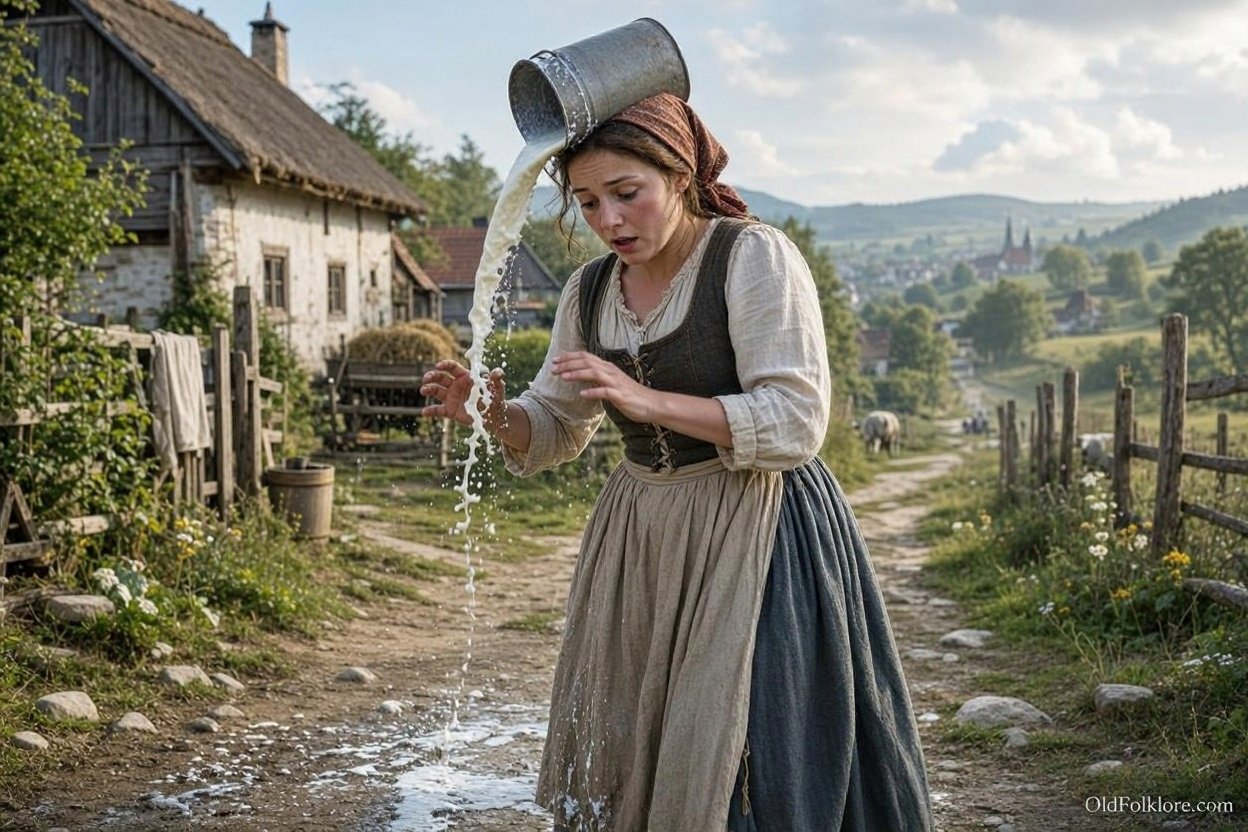
Patty was a young milkmaid on her way to market with a pail of milk balanced on her head. She carried the milk carefully as she walked, expecting to sell it and receive money for her efforts.
The journey gave her time to think about what she would do with the money. Rather than concentrating only on the sale ahead, she began imagining the many things she could accomplish with the proceeds.
Her first plan was to buy some fowls from Farmer Brown. She expected the birds to lay eggs every morning, giving her another source of income. Once the eggs were ready, she would sell them to the parson’s wife and use the money from those sales to purchase something special for herself.
Dreams of New Clothes and Admiration
Patty imagined buying a beautiful new dimity frock and a chip hat. She pictured herself wearing the clothes when she next visited the market.
In her imagination, the young men would notice her appearance and approach to speak with her. She also thought about Polly Shaw, imagining how jealous the other girl would become when she saw Patty looking so fashionable.
Explore more stories from our Aesop’s Fables collection.
The milkmaid became increasingly pleased with the future she had created in her thoughts. She imagined herself enjoying the admiration of others and felt confident about the rewards that seemed to await her.
Her plans depended on several things happening successfully. She first needed to sell the milk, buy the fowls, collect their eggs and sell them. Only after completing those steps could she afford the clothes she desired.
However, Patty became so carried away by her imagined success that she forgot the milk she was carrying.
The Accident That Ended Her Plans
While imagining how she would look in her new clothes, Patty decided to demonstrate how she would toss her head proudly when she met the other young people at the market.
As she spoke to herself, she tossed her head backwards. The movement disturbed the balance of the pail, causing it to fall from her head.
The pail struck the ground, and all the milk spilled.
With the milk gone, Patty had nothing left to sell. Her plans to purchase fowls, collect eggs and buy new clothes could no longer proceed. The entire chain of expectations had collapsed because of one careless movement.
Instead of returning home with money and the satisfaction of a successful market visit, she had to go back and explain to her mother what had happened.
Her Mother’s Wise Advice
When Patty returned home and told her mother about the accident, her mother responded with a familiar warning.
She reminded her daughter not to count her chickens before they were hatched.
The saying expressed the lesson behind Patty’s experience. She had treated every imagined step as though it had already happened. Before selling the milk, she had planned how to spend the money. Before buying the fowls, she had imagined selling their eggs. Before earning anything from those sales, she had already pictured herself wearing new clothes and receiving admiration.
Her mother’s advice encouraged her to understand that hoped-for rewards should not be treated as certain achievements.
The milk had been real, but the money, fowls, eggs and new clothes existed only in Patty’s imagination. Once the milk was spilled, none of those plans could become reality.
Explore our complete Historic Folklore & Fairy-Tale Collections archive.
Moral Lessons
The story teaches the importance of remaining focused on the task at hand. Patty allowed her imagination to distract her from carrying the milk safely, and her carelessness caused her loss.
It also reminds readers that success should not be assumed before the necessary work has been completed. Making plans is useful, but treating uncertain outcomes as guaranteed can lead to disappointment.
Patty’s experience further illustrates the danger of becoming too confident about rewards that have not yet been earned. It is wiser to complete each step before celebrating the next.
Knowledge Check
1. Who was Patty?
Patty was a milkmaid carrying a pail of milk to market.
2. What did Patty plan to buy with the money from the milk?
She planned to buy fowls from Farmer Brown.
3. What did she intend to do with the eggs?
She planned to sell them to the parson’s wife.
4. What did Patty hope to buy for herself?
She hoped to buy a new dimity frock and a chip hat.
5. How did Patty lose the milk?
She tossed her head backwards while imagining how she would behave at the market, causing the pail to fall.
6. What advice did Patty’s mother give her?
Her mother told her not to count her chickens before they were hatched.
Source
This retelling is based on “The Milkmaid and Her Pail” in The Fables of Aesop: Selected, Told Anew, and Their History Traced (1894). The collection presents the fable under Aesop’s name and was selected and retold by Joseph Jacobs, who served as its editor and reteller. Richard Heighway provided the illustrations.
Digital source: Project Gutenberg, eBook No. 28.
Explore More Aesop’s Fables
- The Hare and the Tortoise
- The Fox and the Crow
- The Wolf and the Crane: An Aesop Fable
- The Wind and the Sun: An Aesop’s Fable
- The Fox and the Grapes
- The Goose with the Golden Eggs
- The Wolf and the Lamb
- The Fox and the Mask: Why Inner Worth Matters