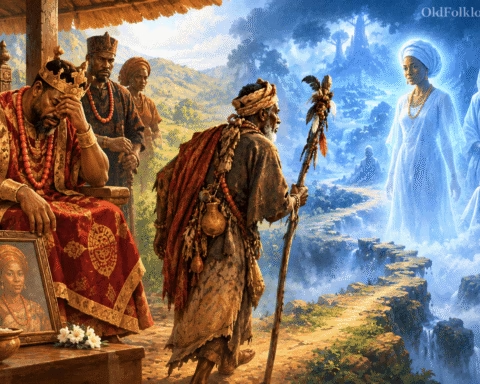
When Kafuti is chosen to become the new Olosoma of an Ovimbundu kingdom in central Angola, the people prepare for a grand coronation. Before the ceremony, however, the elders remind him that leadership demands far more than honour and authority. Their lessons soon prove valuable when disputes threaten the peace of his kingdom and a poor harvest tests the strength of its communities.
The Meaning of Leadership
The highlands of central Angola were home to Ovimbundu communities whose lives were shaped by farming, craftsmanship, trade and established systems of traditional authority. Their kingdoms connected numerous settlements, each with its own families, responsibilities and local customs.
At the heart of an Ovimbundu kingdom stood its ruler, known as an osoma. Traditional authority was supported by relationships with community leaders, elders and other people whose knowledge helped maintain social order. The responsibilities and customs of leadership differed between kingdoms, but the position carried obligations that reached beyond the ruler’s household.
In one such kingdom, the people had long depended upon their ruler to hear disputes, protect their interests and guide the community through difficult times.
When the old ruler died, the kingdom entered a period of mourning. The elders gathered to consider the future, knowing that choosing a successor required careful thought.
Several people came from respected families, but the elders did not believe that family standing alone was enough to make someone a good ruler. They discussed the qualities the next Olosoma would need to govern responsibly.
Courage mattered, but courage without judgement could lead to unnecessary conflict. Wealth could support a kingdom, but riches did not guarantee fairness. A ruler also needed patience, honesty, self-control and the ability to listen to people whose circumstances differed from his own.
After several days of consultation, the elders agreed upon a man named Kafuti.
He belonged to a respected family, yet his reputation rested on more than his ancestry. Throughout his life, he had listened carefully to others, helped neighbouring settlements during difficult harvests and sought peaceful solutions when disagreements arose.
Kafuti had never expected to become ruler. When the elders informed him of their decision, he accepted the responsibility with humility.
He understood that the position would demand more from him than anything he had undertaken before.
Preparing for the Coronation
News of Kafuti’s appointment spread from one settlement to another. Messengers carried invitations, families prepared to receive visitors, and craftspeople helped ready the ceremonial grounds.
The preparations brought the community together. Some people repaired seating for the elders, while others arranged food and water for guests. Musicians practised, and families prepared their finest garments for the occasion.
The ceremony was not merely an opportunity to celebrate a new ruler. It also gave the community a chance to gather, acknowledge the change in leadership and express its hopes for the future.
As the preparations continued, Kafuti found himself thinking about the responsibility ahead. People greeted him warmly and spoke of the good they expected him to accomplish. Their confidence pleased him, but it also made him aware of how much they would depend upon his decisions.
On the evening before the coronation, the council of elders invited him to a private meeting.
Inside the meeting house, the atmosphere was quiet. There were no drums or songs, only the elders seated together and the young man who would soon become their ruler.
The oldest adviser spoke first.
“Tomorrow, many people will celebrate your appointment. They will see the symbols of your office and hear the words spoken before the community. But a ceremony cannot make a person wise. Your actions must give meaning to the position you are about to receive.”
Kafuti listened attentively.
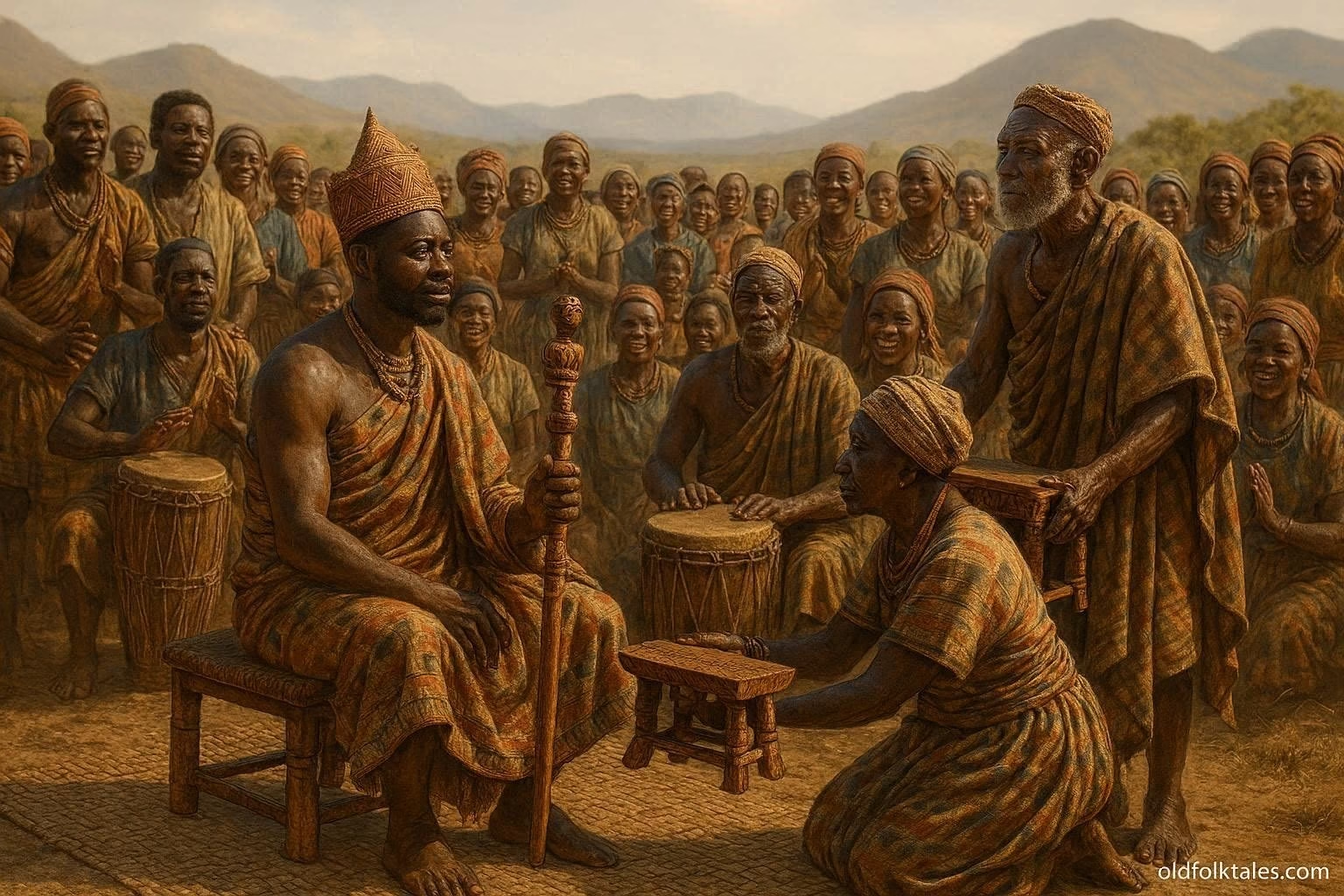
One elder placed a carved staff before him.
“Let this remind you of justice. Never use your authority to punish someone merely because you dislike them. Hear the facts and consider the consequences before making a decision.”
Another elder gestured towards the ceremonial seat prepared for the occasion.
“Remember that a ruler’s position is a responsibility, not a reward. The people must be able to approach you when they need to be heard.”
A third adviser spoke about unity.
“A kingdom is made of many families and communities. Their interests will not always be identical, but you must seek ways for them to live together without allowing every disagreement to become a quarrel.”
Kafuti considered their words.
He had often seen how a careless remark could turn a small misunderstanding into a serious disagreement. As ruler, his words would carry greater weight, and an unfair decision could affect people far beyond those directly involved.
The eldest adviser gave him one final instruction.
“Do not believe that becoming Olosoma means you have finished learning. It means you must learn more carefully than before.”
Kafuti thanked the elders. He left the meeting determined to remember their advice long after the celebrations ended.
The Day of Coronation
Before dawn, the kingdom began to awaken. Drums sounded across the hills, announcing the day’s gathering, while families prepared for the journey to the ceremonial grounds.
Visitors arrived from neighbouring settlements, bringing greetings and gifts. Children watched the preparations with excitement, eager to witness an occasion they had heard about from older relatives.
The elders assembled first. Musicians followed, filling the morning with rhythms that accompanied the gathering. Families and visitors found places around the ceremonial grounds as the sun rose above the hills.
Kafuti entered with measured steps. He did not try to appear greater than the people who had gathered to witness his appointment. He understood that the occasion was about the responsibility he was accepting, not simply the honour he was receiving.
At the centre of the gathering stood the ceremonial seat prepared for the new ruler.
Before Kafuti took his place, the eldest adviser addressed the assembly.
“A kingdom does not exist to serve the pride of its ruler. Its ruler must serve the needs of the kingdom.”
The people listened in silence.
The adviser then turned to Kafuti and asked whether he would hear the concerns of his people before passing judgement.
“I will,” Kafuti replied.
“Will you consider the needs of those who lack wealth or influence?”
“I will.”
“Will you seek wise counsel when a problem exceeds your knowledge?”
“I will.”
“Will you protect the community and work for peace without abandoning justice?”
“I will.”
The elders witnessed his promises, and the gathering heard them clearly. Only then did Kafuti take his place as the new Olosoma.
The ceremony gave way to celebration. Drummers played, singers performed, and dancers entertained the gathering. Families shared food with visitors, while elders recalled lessons passed down through generations.
Explore more stories from our Angolan Folktales Collections archive.
Kafuti greeted the people and thanked them for their confidence. Yet beneath the excitement, he remembered the quiet meeting of the previous evening.
The ceremony had marked his appointment. The work of leadership was only beginning.
The Dispute Over the Grazing Land
Kafuti’s first serious test arrived only a few weeks after the coronation.
Heavy rain had changed the course of a small stream near two neighbouring villages. The alteration affected the land that both communities used for grazing their animals.
Each village claimed that the disputed ground belonged within its traditional boundaries. Farmers and herders argued that their families had relied upon the land for many years, while younger men on both sides demanded a quick decision.
As tempers rose, the possibility of confrontation became harder to ignore.
When the dispute reached the royal council, some advisers urged Kafuti to decide immediately. They believed that a firm announcement would demonstrate his authority and prevent the disagreement from spreading.
Kafuti remembered the elders’ warning. A fast decision was not necessarily a fair one, especially when he had not heard the people involved.
He invited representatives from both villages to explain their claims before the council.
The first group described how its families had used the land and pointed to places that marked their understanding of the boundary. The second group presented its own account, explaining how the stream and surrounding ground had been used by previous generations.
Kafuti listened without interrupting. He asked the representatives to clarify their accounts and encouraged the elders familiar with the area to share what they remembered.
The discussion continued for two days. Some details remained disputed, but the council gained a clearer understanding of the history of the land and the practical needs of both communities.
Kafuti then considered the available information alongside the customary arrangements described by the elders.
He concluded that the change in the stream’s course did not, by itself, justify abandoning the longstanding shared use of the grazing ground. He called upon both villages to respect their established arrangements and work together to manage the area fairly.
Neither community received everything it had wanted. However, both had been heard, and the decision offered a way to prevent the disagreement from becoming a violent confrontation.
Kafuti also asked representatives of the villages to return if the arrangement created new difficulties. He wanted the communities to resolve practical concerns through discussion rather than allow resentment to grow.
The representatives accepted the decision, although some needed time to reconcile themselves to the outcome.
In the following weeks, cooperation gradually resumed. Herders returned to the grazing ground, and the two villages began discussing how to manage their shared needs.
The dispute taught Kafuti an important lesson. Justice did not always mean giving one side everything it demanded. Sometimes it required careful listening, an understanding of customary arrangements and a decision that prevented one disagreement from harming an entire community.
A Difficult Harvest
Months later, another challenge threatened the kingdom.
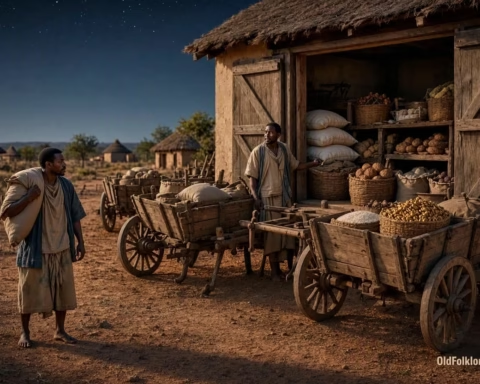
Rainfall had been uneven, and several villages produced smaller harvests than expected. Families worried that their grain would not last until the next growing season.
The problem was particularly serious in settlements where poor harvests had left little surplus to store. Some households reduced their meals, while others feared they would have to abandon important farming activities to search for food elsewhere.
Kafuti called the elders and community representatives together to discuss the situation.
Each settlement reported its circumstances. Some had enough grain to manage for a while, while others faced immediate shortages. The discussions revealed that the kingdom’s resources were unevenly distributed, making cooperation essential.
Kafuti proposed that communities with sufficient reserves share a reasonable portion with those facing the greatest need. He also encouraged families to coordinate the use of available farming tools and help households that lacked enough workers to prepare their fields.
The proposal required careful organisation. The kingdom could not assume that every household had plenty to spare, and those offering assistance needed assurance that their own families would not be placed in danger.
The elders helped assess the available reserves and identify the most urgent needs. Contributions were arranged according to what communities could reasonably provide, and the distribution was discussed openly to reduce suspicion and resentment.
Craftspeople also offered practical help. Those able to repair damaged tools assisted farmers who could not afford replacements, while neighbours helped prepare fields and complete essential tasks.
Kafuti visited several affected settlements to hear how the arrangements were working. He asked whether the assistance was reaching those who needed it and encouraged the representatives to report any problems.
The difficult season did not disappear overnight. Families still had to work hard, and the smaller harvests placed pressure on everyone. Nevertheless, sharing resources and labour helped the kingdom endure the shortage.
As the next growing season approached, the people began preparing their fields again. Those who had received help contributed where they could, strengthening the sense that the community’s welfare depended on the efforts of many households.
The elders watched these developments with quiet satisfaction. Kafuti had not solved the harvest problem through authority alone. He had brought people together, listened to their needs and helped them organise a practical response.
The Elders’ Final Lesson
One evening, several months after the coronation, Kafuti met with the council of elders.
They discussed the grazing dispute, the difficult harvest and the arrangements that had helped the villages support one another. Kafuti admitted that some decisions had been harder than he expected. At times, people had disagreed with him, and he had worried that a decision might create resentment even when he believed it was necessary.
The oldest adviser listened carefully.
“You are discovering what it means to lead,” he said. “People will not always agree with your decisions. What matters is whether you have listened, considered the evidence and acted with responsibility.”
Kafuti asked whether the elders believed he had fulfilled the promises made during the ceremony.
The old man smiled.
“The coronation gave you the office. Your actions give it meaning. Each time you listen fairly, seek counsel or help the community face a difficulty, you show that you understand the responsibility you accepted.”
Kafuti thought about the words spoken before he had taken his seat. He had once imagined the coronation as the moment when his journey towards leadership would be complete. Now he understood that it was the beginning of a continuing obligation.
The elders reminded him that no ruler could know everything. A wise leader needed advisers, honest reports and the willingness to correct mistakes. Authority could help settle a dispute, but trust grew when people believed that their concerns had been considered fairly.
Kafuti thanked the council for its guidance. He resolved to continue learning from the people around him, including those who questioned his decisions.
A Legacy of Responsible Leadership
As the years passed, Kafuti became known for his patience and willingness to seek counsel. He did not prevent every disagreement or remove every hardship from the kingdom. No ruler could promise such a thing.
Instead, he tried to ensure that disputes received a fair hearing and that communities facing difficulties were not left without support. He encouraged people to discuss problems before resentment turned into open conflict, and he treated leadership as a responsibility shared with those who helped govern the kingdom.
When younger people asked him what he had learnt from his coronation, he did not begin with the celebration, the music or the ceremonial seat.
He spoke about the elders who had warned him against pride. He recalled the two villages whose dispute had taught him the importance of listening, and the families whose cooperation had helped the kingdom endure a poor harvest.
He reminded his listeners that a ruler’s title could command attention, but only conduct could earn lasting respect.
The historical traditions of Ovimbundu kingdoms demonstrate that traditional authority was connected to local political organisation, customary practices and relationships between rulers, elders and communities. Historical accounts also show that succession, royal legitimacy and investiture varied across kingdoms rather than following one identical ceremony everywhere.
Kafuti’s coronation is a fictional story inspired by this broader historical context. His experiences offer a moral reflection on the responsibilities that accompany authority.
The ceremonial staff and seat in the tale remind him of obligations that continue after the music stops. The dispute over grazing land shows why listening and careful judgement matter, while the poor harvest reveals how cooperation can help communities withstand hardship.
The story of the Coronation of an Olosoma teaches that leadership cannot be measured by ceremony alone. Its true value appears in the everyday decisions that affect people’s lives.
A ruler may receive a title in a single day, but earning the trust of a community requires patience, humility and consistent service.
Explore our complete Africa Folktales
Moral Lesson
True leadership is measured by fairness, humility and service to the community. Authority earns lasting respect when it is exercised with wisdom, careful judgement and concern for others.
Knowledge Check
1. What is an Olosoma in the story?
An Olosoma is the ruler of an Ovimbundu kingdom.
2. Why did the elders choose Kafuti as the new ruler?
They valued his patience, honesty, willingness to listen and commitment to helping others.
3. What lessons did the elders share with Kafuti before his coronation?
They reminded him to use authority fairly, listen before judging, seek wise counsel and consider the needs of the community.
4. How did Kafuti resolve the dispute over the grazing land?
He heard both villages, consulted the elders and upheld a shared arrangement that helped prevent conflict.
5. How did the kingdom respond to the poor harvest?
Communities shared available grain, helped with farming tasks and repaired tools to support households facing shortages.
6. What is the main lesson of the story?
Leadership requires fairness, humility, wise judgement and a commitment to serving the community.
Source
A contemporary adaptation inspired by documented Ovimbundu kingship and traditional governance in Angola, including the discussion of royal authority and the role of elders in Chronicles of Bailundo: A Fragmentary Account in Umbundu of Life Before and After Portuguese Colonial Rule and Alfred Hauenstein’s study “La royauté chez les Ovimbundu” (1983).
Explore More Angolan Folktales
- The Eagle and the Candimba: A Shocking Betrayal
- The Bangão Crocodile: A Fearless Fight for Justice
- Sudika-Mbambi: The Invincible Hero
- The River Spirit’s Three Questions
- The Cave of the Sleeping Ancestors
- The First Soba’s Staff
- Sona: The Sand Drawings of Wisdom
- The Caravan Leaders of Bié