Long before the world took the shape known today, there was neither land nor sky, neither day nor night. Everything existed within a kingdom ruled by the Naba Zid-Wendé, whose power brought order to the emptiness. From this beginning came the Earth, the sun, the moon, animals and human beings.
But the creation of the world did not bring lasting harmony. Human beings became dissatisfied with their blessings, allowed suspicion and arrogance to influence their actions, and eventually lost the extraordinary gift of an edible sky. Their conduct also brought division among people and saddened their creator. This Mossi creation story explains the origins of the world, the relationship between humanity and nature, and the traditional tale of how the tortoise acquired its unusual appearance.
The Beginning of Everything
In the beginning, there was no Earth. There was no ground beneath anyone’s feet, no sky stretching across the heavens, and no distinction between day and night. Time itself had not yet begun. Nothing existed in the familiar form in which the world would later be known.
The only place that existed was the Kingdom of Everlasting Truth. It was ruled by the Naba Zid-Wendé, who held the power to bring creation into existence.
The kingdom had remained in emptiness, and the Naba Zid-Wendé eventually decided to create a world beyond it. They began by bringing the Earth into existence. After creating the Earth, they established the day and the night, giving the world its first divisions of time.
They created the sun to illuminate the day. Its light would make it possible for living beings to see and carry out their activities. They also created the moon to illuminate the night, providing a different light for the hours when the world should rest.
Through these creations, day followed night, and time began to have meaning. The world was no longer an empty place without distinction. It had a rhythm that would guide the lives of the creatures yet to come.
The Fire Beneath the Earth
Although the Earth had been created, it was not immediately ready to support life.
Its surface was covered with fire. The intense heat made it unsuitable for the living creatures that the Naba Zid-Wendé intended to create. Before placing animals and human beings upon it, they needed to make the surface cool and stable.
Explore more stories from our Burkinabe Folktales Collections archive.
The Naba Zid-Wendé therefore ordered the fire to leave the surface and settle inside the Earth. The fire was instructed to remain beneath the ground so that the surface could become a habitable place.
The wind was also sent to cool the Earth. Gradually, the conditions necessary for life began to develop.
The fire, however, did not disappear. It remained within the Earth, separated from the surface where living creatures would move. Although it had been given a place beneath the ground, the story presents it as a resentful force whose anger would later have serious consequences.
The Earth was now ready for further preparation. Before creating the many animals that would inhabit it, the Naba Zid-Wendé needed to establish whether the ground could support their weight and whether its temperature was suitable for life.
Testing the Earth with Animals
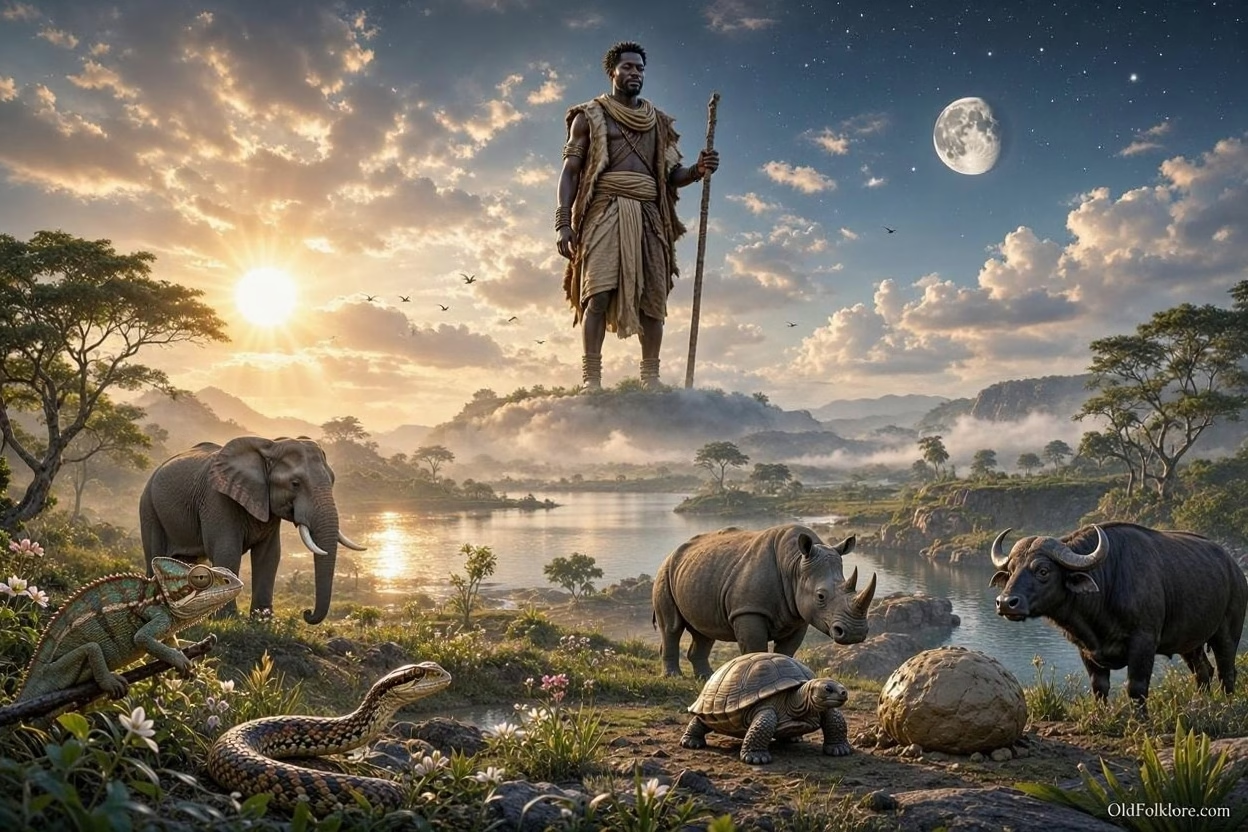
The Naba Zid-Wendé began their work by creating a chameleon.
This first creature served an important purpose. The creators wanted to discover whether the Earth’s outer surface was strong enough to carry the weight of a living animal. They watched to see whether the ground would hold the chameleon without breaking.
When the Earth supported it, they proceeded with another creation.
They made a serpent and allowed it to move across the ground. Its movement helped establish whether the surface had cooled sufficiently for animals to live upon it.
The serpent crawled along the Earth without showing signs of discomfort from the heat. This gave the Naba Zid-Wendé confidence that the surface was becoming suitable for life.
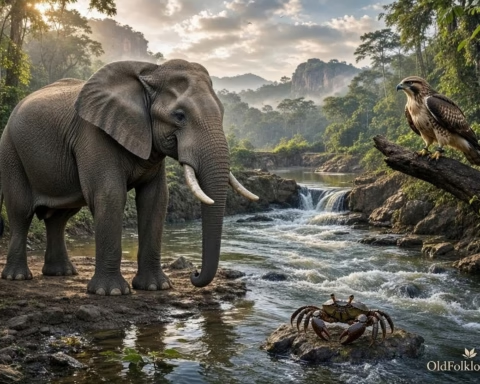
They then created larger animals, including the elephant, rhinoceros and buffalo. Other accounts of the story also include the giraffe.
These creatures were much heavier than the first animals. Their ability to live and move upon the ground demonstrated that the Earth’s surface had become sufficiently firm and cool.
The tests were successful. The ground could support small creatures as well as large animals, and the Earth was ready to sustain a wider variety of life.
The Creation of Human Beings
After establishing that the Earth could support life, the Naba Zid-Wendé turned to the creation of human beings.
They made human beings with very dark skin. In the account recorded by Frédéric Guirma, black was associated with strength, and this colour also distinguished human beings from the sun, which was red, and the moon, which was white.
The creation of human beings involved more than giving them physical bodies. The Naba Zid-Wendé breathed upon them and gave them souls.
This breath made them living beings. They were no longer simply forms created from the substance of the Earth. They possessed life and became part of the world that the creators had prepared.
The Naba Zid-Wendé welcomed their human creations with an immeasurable smile. That smile became the sky.
The sky was placed so low that human beings could reach it by raising their hands. It was not merely something beautiful above their heads. It was also a source of food.
Human beings could obtain what they needed from the sky without first having to cultivate the land or undertake difficult work. Food was available to them, and they lived with the extraordinary blessing of having their needs supplied.
Beyond the sky, the Naba Zid-Wendé created the stars and other wonderful things. The world was filled with provisions and opportunities for life.
At this stage, humanity had received generous gifts. There was food, a habitable Earth, light from the sun and moon, and a sky that could provide nourishment.
But the harmony did not last.
Human Suspicion and the Fire’s Return
As time passed, human beings became dissatisfied. Instead of appreciating the provisions they had received, they began to suspect that the Naba Zid-Wendé had withheld something valuable from them.
They believed that an important treasure had been hidden beneath the mountains. Their curiosity turned into suspicion, and they began digging into the mountains in search of what they imagined had been concealed.
Their digging eventually exposed the fire that had been ordered to remain beneath the Earth.
The fire was still angry with the Naba Zid-Wendé. It was also jealous of the human beings who had received so many blessings.
Once released, it burst into flames. Its anger became destructive, and the flames rose towards the sky.
The sky, which had been created from the smile of the Naba Zid-Wendé, could no longer remain in its former position. The heat forced it to withdraw.
It rose higher and higher, moving beyond the stars until it returned to the Kingdom of Everlasting Truth, where the flames could no longer reach it.
The gift that had once been within human beings’ reach was now far above them.
They could no longer raise their hands and take food from the sky. Their earlier abundance had disappeared, and the consequences of their suspicion and curiosity became clear.
New Gifts for Life on Earth
The departure of the sky changed the conditions of human life.
Without the edible sky, people could no longer obtain their food in the same effortless way. The world needed other sources of nourishment and moisture.
The Naba Zid-Wendé nevertheless continued providing for the creatures they had created.
They made clouds, rivers and streams to bring water to the Earth. These would keep the land moist and help sustain living things.
They also created plants that human beings could use for food. Trees were provided to produce fruits, giving people another source of nourishment.
The Earth gradually received the natural features necessary to support life without the sky being within reach.
Flowers were also created to make the world beautiful. Their colours added beauty to the land, while their fragrances brought the pleasant scents associated with life.
Although humanity had lost the earlier gift of the edible sky, the Naba Zid-Wendé had not abandoned the Earth. They provided water, vegetation, fruits and flowers so that life could continue.
Yet human beings did not learn from the loss they had already experienced.
The Lake of Hatred and Division
As humanity multiplied, its arrogance increased.
People became increasingly conceited and committed more acts of meanness. The Naba Zid-Wendé became concerned about the direction in which their creations were moving.
They wanted human beings to be purified of the behaviour that was creating hostility among them. To achieve this, they created a great lake with blue water.
The Naba Zid-Wendé instructed human beings to go and bathe in it. The bath was intended to cleanse them and help remove their arrogance.
However, the people were occupied with other matters. They did not immediately respond to the instruction, and the lake remained unused.
This delay created another opportunity for the fire to cause harm.
The fire had not forgotten its anger. It took advantage of the absence of human beings and contaminated the lake with hatred, envy and division.
The water that had been prepared for purification was now filled with the very qualities that were troubling humanity.
Eventually, the Naba Zid-Wendé saw that the people were not taking the opportunity to bathe. They therefore sent the sun to dry up the lake.
The sun’s heat gradually reduced the water. Only when the lake was almost dry did the people finally decide to enter it.
By then, the water had already been contaminated.
The Different Colours of Humanity
The first group of human beings entered the lake and bathed in its water. When they emerged, their bodies had become completely white from head to toe.
The second group entered after them. They too bathed, but when they came out, their bodies had become yellow.
The third group followed and received a different colour. Their bodies became copper-red.
By the time the final group arrived, the sun had dried up most of the lake. There was very little water remaining.
The people in this last group could only wash their hands and feet. Their bodies remained black, but the palms of their hands and the soles of their feet took on the colours left in the water.
Thus, the story explains the different colours of human beings through the lake that had been contaminated by hatred, envy and division.
The change did not bring the purification that the Naba Zid-Wendé had originally intended. Instead, it became another reminder of how human conduct had affected the gifts prepared for them.
The Unfinished Creation of the Tortoise
After some time, the Naba Zid-Wendé returned to the Earth to see how their creations were living.
They also intended to complete one final animal. They had begun shaping it from a lump of clay, but its creation had not yet been finished.
When the Naba Zid-Wendé arrived, the plants and animals were delighted. They organised a celebration to welcome their creators.
The human beings, however, were occupied with other matters. They were dividing the land among themselves and enslaving one another.
Instead of joining the celebration, they remained focused on their disputes and divisions.
The Naba Zid-Wendé were deeply saddened by what they witnessed. They had created a world filled with life and provided human beings with everything necessary to live, yet people were using their lives to dominate and mistreat one another.
Their sadness became so great that they forgot about the unfinished animal they had been shaping.
The creature remained without its complete form. Eventually, it began crying out for the parts it still needed. It wanted a head, legs and a tail.
The Naba Zid-Wendé finally remembered their creation. However, their sadness and disappointment affected the way they completed the work.
They hurriedly finished shaping the creature from clay, without the attention and care that might otherwise have been given to it.
This unfinished and hurried creation became the tortoise.
The story therefore explains the tortoise’s unusual appearance through the sadness of the Naba Zid-Wendé and the failure of human beings to live peacefully with one another.
The plants and animals had celebrated the return of their creators, but humanity had allowed division and the desire for power to keep it away from the celebration.
The world continued to exist, with its rivers, trees, animals and people, but the relationship between humanity and the gifts of creation had changed.
Explore our complete Africa Folktales collection.
Moral of the Story
The story teaches that human beings should appreciate the gifts they receive and use them responsibly. The first people had access to abundant food and a world prepared for their comfort, but suspicion and arrogance contributed to the loss of the edible sky. Their later behaviour also brought hatred, envy and division. The Naba Zid-Wendé’s sadness over human cruelty reminds us that selfishness, oppression and the mistreatment of others damage the harmony of a community. The story also encourages respect for nature, since the Earth, animals, plants and water are all presented as important parts of creation.
Knowledge Check
1. Who were the Naba Zid-Wendé?
They were the rulers of the Kingdom of Everlasting Truth and the creators responsible for bringing the Earth and its living creatures into existence.
2. Which animals did the Naba Zid-Wendé create to test the Earth?
They created the chameleon and the serpent before making larger animals such as the elephant, rhinoceros and buffalo.
3. What happened when human beings searched beneath the mountains?
They released the fire that had been ordered to remain beneath the Earth. The fire rose into the sky and forced it to withdraw beyond the stars.
4. Why did the Naba Zid-Wendé create the lake?
They created it so that human beings could bathe and be purified of their growing arrogance and harmful behaviour.
5. What caused the different human colours in the story?
The fire contaminated the lake with hatred, envy and division. The groups that bathed in its water emerged with different colours.
6. How does the story explain the appearance of the tortoise?
The Naba Zid-Wendé became saddened by human beings’ divisions and forgot to complete the animal they were shaping. They eventually finished it hurriedly, giving the tortoise its unusual appearance.
Source
Adapted from the Mossi creation story “The Naba Zid-Wendé”, first recorded by Frédéric Guirma in Tales of Mogho: African Stories from Upper Volta (1971), published by Macmillan. A later adaptation by Sybson Yawo Sema appeared in The Earth Stories Collection in 2019.
Explore More Burkinabe Folktales
- The Child Marked by the Spirit World
- Yennenga the Warrior Princess
- Ouédraogo and the Origin of the Mossi Kingdom
- The Tale of the Singing Camel
- The Origin of the Mossi Kingdom’s Drum
- The Trickster Hare and the Sacred Baobab Tree
- The Beautiful Daughter and the Crocodile