Every community has stories that connect its people to their ancestors and explain the beginnings of their homeland. Among the Bakossi people of Southwest Cameroon, one such account tells of a hunter named Ngoe and a mysterious woman whose meeting changed the course of his life. Their union brought forth a large family, but an unexpected visitor would soon reveal that their lives were about to face a greater challenge. As a devastating flood threatened their survival, the family had to find a way to escape the approaching disaster. This is the ancestral story of Ngoe and Sumediang, a Bakossi origin myth associated with the beginnings of the people and the naming of Muanenguba.
The Lonely Hunter
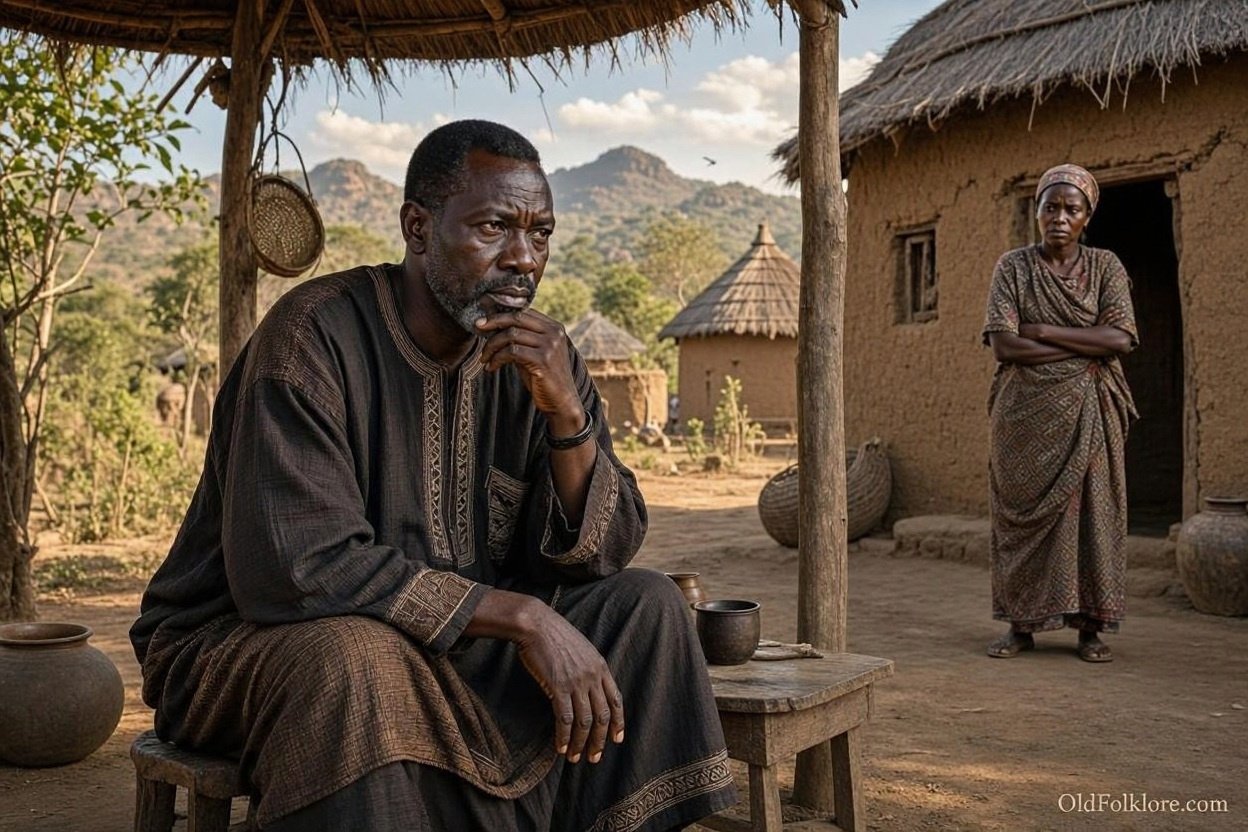
Long ago, in the mountainous region inhabited by the Bakossi people, there lived a hunter named Ngoe, also known as Ngweh. He was familiar with the forests and mountains and regularly ventured into the wilderness in search of game.
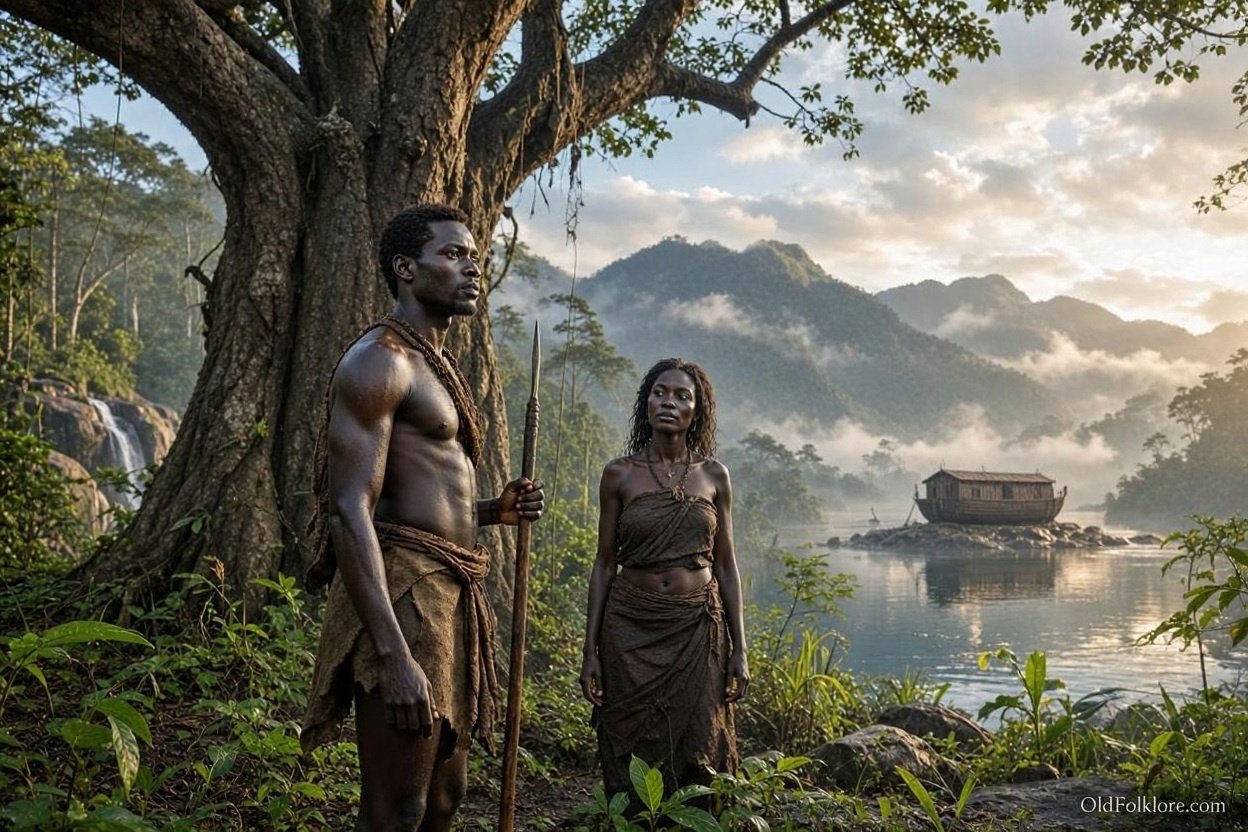
One day, Ngoe went into the mountains to hunt. He travelled through the forest for a long time, hoping to find an animal, but his efforts brought him no success. Eventually, tired from walking and searching, he decided to rest beneath a baobab tree.
As he settled beneath the tree, an unexpected sight caught his attention. A beautiful woman stood nearby. Her appearance surprised him because he had not seen her approaching.
Ngoe was immediately captivated by her beauty. He wanted to approach her, but before he could reach her, she disappeared.
The encounter left him confused. He wondered who the woman was, where she had come from and how she had vanished so suddenly. More than anything, he wanted to see her again.
His interest in the mysterious stranger became so strong that he abandoned his hunting expedition and began searching the surrounding forest for her.
Ngoe’s Search for the Mysterious Woman
Ngoe searched through the forest for three days and three nights. He looked through the places where he had travelled and continued searching despite his exhaustion.
The woman remained difficult to find. Each passing day brought uncertainty, but Ngoe refused to abandon his search. The mysterious encounter had made such a strong impression on him that he was determined to discover her identity.
On the fourth day, his search finally came to an end.
Explore more stories from our Cameroonian Folktales Collections archive.
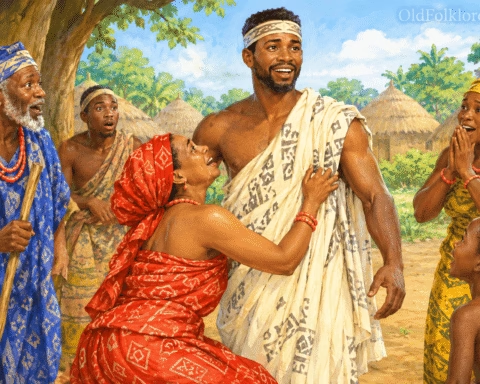
He found the woman sleeping beneath a palm tree. Recognising her as the person he had seen earlier, Ngoe approached her.
He declared that he had found his wife.
The woman responded that she had found her husband.
Her name was Sumediang. Their meeting marked the beginning of a relationship that would become central to the Bakossi account of their ancestral beginnings.
Ngoe and Sumediang eventually married and established a family together. Their household grew as they welcomed many children, whose descendants became associated with different clans of the Bakossi and neighbouring communities.
The Growing Family of Ngoe and Sumediang
The union between Ngoe and Sumediang became important in the tradition because of the large family that followed.
The recorded account identifies several of their sons by name. These include Anongoe-Nninong, Mbongoe-Mwambong, Ngelendoe-Muangel, Enamengoe-Mwamenam, Mukundange-Bakundu and Asomengoe.
Other names mentioned include Abongoe-Babubog, Khangoe-Elung, Ngubengoe-Nhia, Nssuossuengoe-Bassossi, Elongoe-Mwangem, Nforngoe-Bafaw and Mbohngoe-Mbo.
These names are significant to the story because they connect the ancestral couple with communities and clan identities associated with the Bakossi region.
Through their children and descendants, Ngoe and Sumediang became part of an account explaining how the people and their communities came into being.
However, their growing family would soon encounter an unexpected visitor whose arrival brought news of a danger that threatened their survival.
The Arrival of Ngoténkang
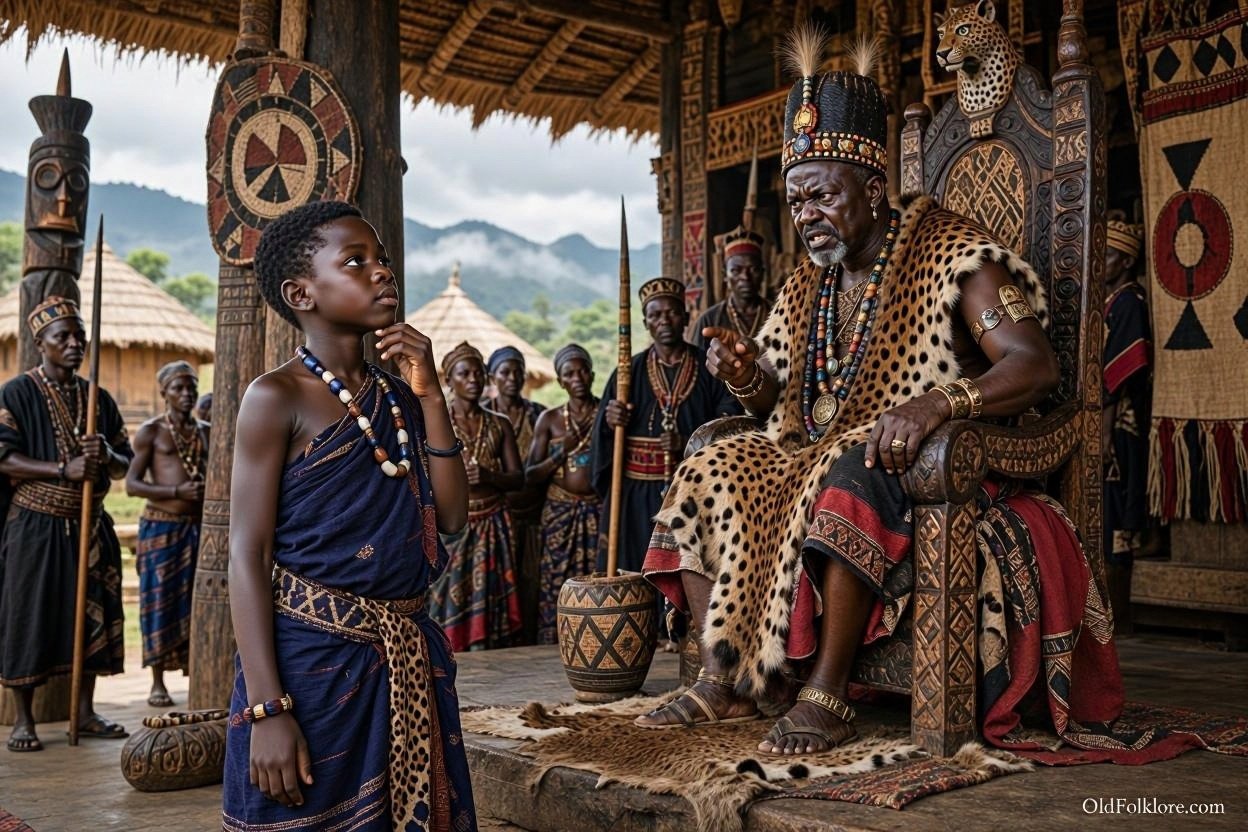
One day, a mysterious visitor named Ngoténkang came to the household of Ngoe and Sumediang.
The recorded account describes her as a supernatural woman and explains that her name referred to a woman afflicted with scabies.
Rather than rejecting the stranger, the family welcomed her into their home. They offered her food and shelter, allowing her to stay with them.
During her visit, Ngoténkang became aware of a terrible danger approaching the family. She warned Ngoe that a great flood was coming and that the disaster would threaten those who failed to find protection.
Her warning changed the situation within the household. The family could no longer regard their peaceful surroundings as entirely safe. They had to prepare for the approaching danger.
Ngoténkang advised them to seek refuge in a large enclosed structure that could protect them from the flood.
Ngoe understood the seriousness of the warning and began making preparations to save his family.
The Great Flood
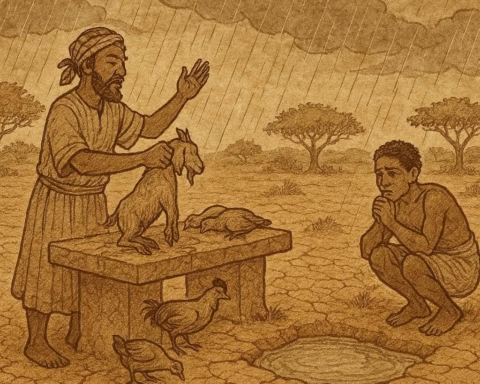
Taking Ngoténkang’s warning seriously, Ngoe built an ark to provide shelter for his household and some animals.
The family prepared to take refuge inside it as the flood approached. When the disaster arrived, the waters spread across the land, threatening everything in their path.
Ngoe, Sumediang, their family and the animals remained inside the ark. Their survival depended on the shelter that Ngoe had prepared before the flood.
The recorded story does not provide a detailed account of the flood’s duration or describe every experience of the family during the disaster. Instead, it focuses on their eventual survival and what they discovered afterwards.
When the flood had passed, Ngoe and his family emerged from the ark. The landscape around them had changed, and they found themselves surrounded by hills.
The family named the place Muanenguba.
The naming of Muanenguba is an important part of this origin tradition because it connects the survival of Ngoe’s family with a recognised geographical feature of the Bakossi homeland.
After leaving the ark, the family settled several kilometres away. Their survival marked a new beginning for the household and its descendants.
The Ancestral Beginning of the Bakossi People
The story of Ngoe and Sumediang presents their family as the ancestral foundation of the Bakossi people.
Their marriage, the birth of their children and the survival of their household after the great flood form the central events of this tradition.
The names of the children are particularly important because the account associates them with different clans and neighbouring communities. Through these family connections, the narrative offers an explanation of how various groups became part of the wider ancestral community.
Muanenguba also occupies an important place in the story. Its naming links the family’s experience after the flood to the landscape of Southwest Cameroon.
Like many origin traditions, the account combines family history, supernatural events and explanations of geographical places. It preserves a particular understanding of ancestry and belonging among the people who have passed it down.
The story is one recorded version of Bakossi origins. It should not be treated as the only account of the people’s ancestry or as a substitute for historical and genealogical research.
Nevertheless, it remains a valuable example of how oral traditions preserve community memories and explain relationships between people, their ancestors and their homeland.
Explore our complete Africa Folktales collection.
Moral Lesson
The story of Ngoe and Sumediang teaches the importance of determination, hospitality and preparedness. Ngoe’s persistence leads him to Sumediang, while the family’s kindness towards Ngoténkang becomes significant when she warns them of the approaching flood.
The tale also highlights the importance of family and ancestral memory. Through the names of Ngoe and Sumediang’s children, the story preserves connections between generations and communities.
More broadly, it reminds us that traditional origin stories help people understand their identity, remember their ancestors and maintain a connection with the places they call home.
Knowledge Check
1. Who was Ngoe?
Ngoe, also known as Ngweh, was a hunter who lived in the mountainous region associated with the Bakossi people.
2. Where did Ngoe first encounter Sumediang?
He first saw her while resting beneath a baobab tree after an unsuccessful hunting expedition.
3. How long did Ngoe search for the mysterious woman?
He searched for three days and three nights before finding her beneath a palm tree on the fourth day.
4. Who was Ngoténkang?
Ngoténkang was a mysterious supernatural visitor whom Ngoe and Sumediang welcomed into their household.
5. What warning did Ngoténkang give the family?
She warned them that a great flood was approaching and advised them to prepare a place of refuge.
6. What name did Ngoe’s family give to the hills they found after the flood?
They named the place Muanenguba.
Source
This story is adapted from “Myth of the Origin of the Bakossi People”, narrated in the Akoose language by Ntiege Mesumbe and recorded by Divine Che Neba in Tombel, Koupé-Manengouba, Southwest Cameroon, on 21 January 2019.
Explore More Cameroonian Folktales
- The Eagle and Leopard Hunting Contest
- Ngiya and Ingenda in the Forest of Truth
- The Elephant and the Ant
- Why the Dog and Cat Are Enemies
- The Chameleon and the Lizard
- Why the Crab Lives in Water