Kambela loved the gentle music of the kissange, a traditional Angolan thumb piano. As a young girl, she spent hours listening to experienced musicians and learning the songs they had inherited from earlier generations. Over time, she became a respected teacher who believed that music could keep a community’s history alive, even when the people who first remembered it were gone.
The Music That Carried Memories
In Angola, traditional music has long accompanied many aspects of community life. Songs can express joy, sorrow, criticism, affection and shared experiences. Some preserve memories of important events, while others pass on lessons about family relationships, work and community responsibilities.
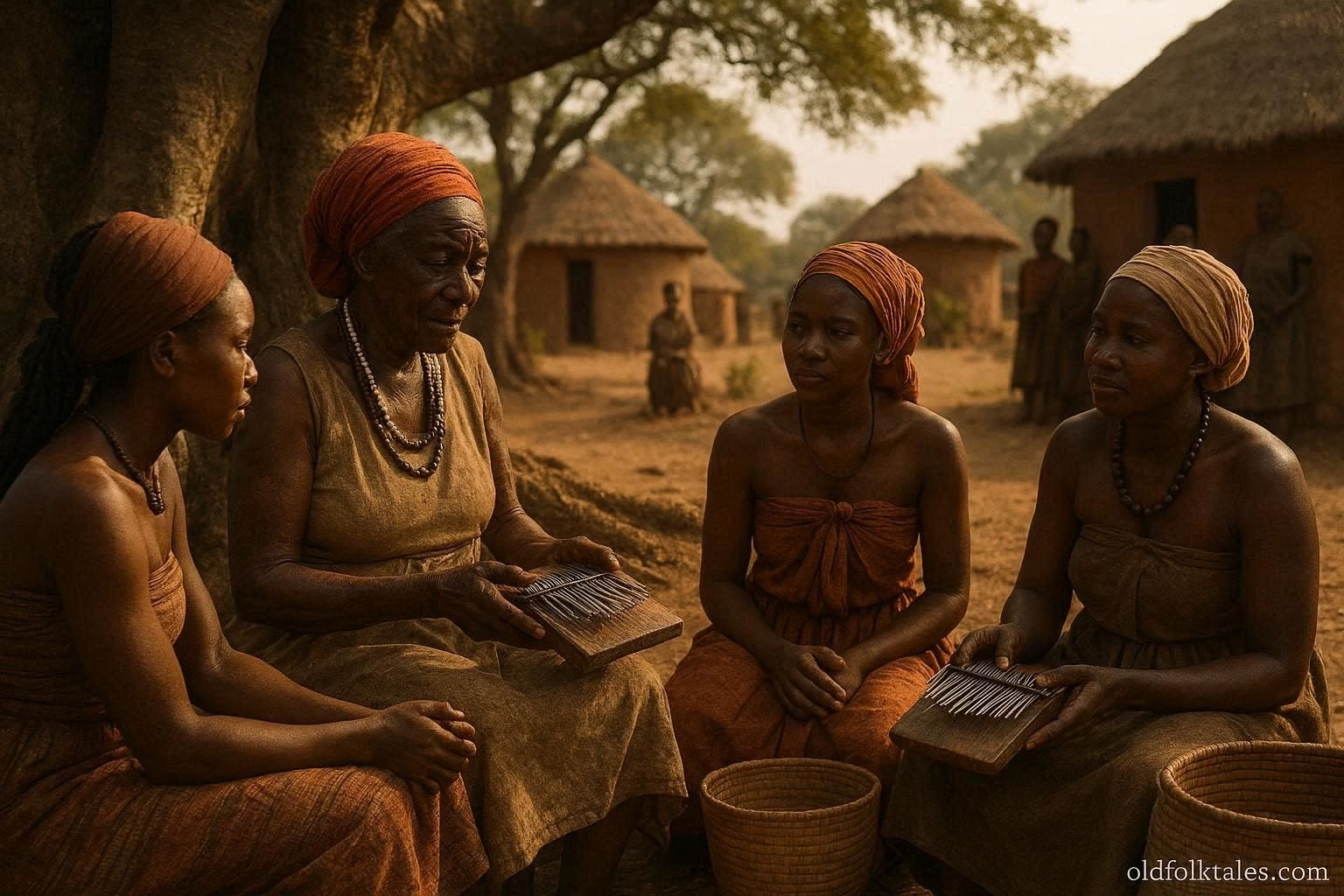
Among the traditional instruments found in Angola is the kissange, also known as the quissange. This type of thumb piano has metal keys fixed to a wooden body or soundboard. Players pluck the keys with their thumbs to produce distinct notes, sometimes accompanying their playing with singing.
For Kambela, the instrument offered more than beautiful sounds. She believed that songs could carry memories across generations, keeping stories alive long after the people who first sang them had passed away.
As a child, she often followed the sound of the kissange through her village. She would find musicians gathered beneath trees or sitting near the warm glow of evening fires. While others listened for pleasure, Kambela watched the players closely, studying how their fingers moved across the metal keys.
One evening, an elderly woman noticed the young girl’s interest and invited her to sit nearby.
“The kissange does more than produce beautiful sounds,” the elder explained. “It helps us remember.”
Kambela carried those words with her. She wanted to learn the instrument, but she also wanted to understand the stories and experiences that gave its music meaning.
Learning from the Elders
The elderly musician became Kambela’s first teacher. She showed the girl how to hold the instrument securely, pluck the keys and listen carefully to the notes they produced.
At first, the lessons were difficult. Kambela sometimes struck the wrong keys or lost the rhythm of a melody. Her fingers struggled to move smoothly, and familiar tunes occasionally slipped from her memory.
The elder encouraged her to practise patiently. She explained that musical skill developed through attention and repetition, not through haste.
Kambela followed her advice. Each day, she returned to her lessons and practised what she had learned. Gradually, her movements became more confident, and she began to recognise the patterns that shaped different melodies.
Yet her teacher insisted that playing the instrument was only part of her education.
She introduced Kambela to songs that recalled family experiences, celebrated important occasions and expressed lessons about human conduct. Some praised generosity and cooperation, while others described hardship and the determination required to overcome it.
The elder explained the meaning of each song before teaching its melody. Kambela listened closely, learning that a tune could be remembered for its sound while its words preserved an experience worth passing on.
Explore more stories from our Angolan Folktales Collections archive.
As the years passed, she studied under other experienced musicians. Each teacher contributed something different, whether a new melody, a playing technique or an explanation of a song’s meaning.
Kambela began to understand the importance of preserving what she learned. If a song was known only to a few elderly musicians, it might disappear when they could no longer perform it.
She therefore listened carefully whenever the elders shared their knowledge. She memorised their songs and took time to understand the experiences behind them.
Her dedication gradually earned their trust.
Preserving the Forgotten Songs
One day, several elders asked Kambela to help preserve songs that few people in the village still remembered.
The responsibility was greater than she had expected. Some melodies had been passed down within families for many years, and their meanings were not always immediately clear to younger listeners.
Kambela visited the elderly musicians and listened as they performed. She paid attention to the words, rhythm and order of each song. When she did not understand a passage, she asked the singer to explain it rather than guessing at its meaning.
She learned songs associated with work, family life, celebration and difficult periods in the community’s past. Some recalled successful harvests, while others described disagreements, journeys or acts of kindness.
Each song offered a different glimpse into the lives of those who had come before her.
Kambela understood that preserving these melodies required care. She tried to remember the words and rhythms as her teachers had taught them, while recognising that the same song could be performed differently by different musicians.
Her work did not end with memorisation. She also began teaching younger girls who gathered around her, eager to learn the instrument.
She welcomed them as her teachers had once welcomed her.
Teaching the Next Generation
Kambela often held her lessons beneath a large tree near the centre of the village. The girls sat close together while she demonstrated how to produce clear notes from the kissange.
Before teaching them complete songs, she showed them how to care for the instrument. They learned to handle its wooden body gently, inspect the metal keys and practise simple patterns until their fingers became more confident.
Some pupils progressed quickly, while others needed more time. Kambela encouraged each girl to practise without comparing her progress with that of her classmates.
Once the pupils could play simple melodies, she introduced them to traditional songs. She explained the circumstances associated with each one and encouraged them to listen to the words as carefully as they listened to the music.
One song recalled a season when a plentiful harvest had helped families through a difficult period. Another celebrated skilled women whose work brought pride to their community. Others expressed the importance of generosity, courage and cooperation.
The girls began to understand that learning a song meant learning something about the people who had carried it forward.
Kambela never treated this knowledge as a possession that belonged only to her. She believed that traditions remained meaningful when people shared them responsibly.
She therefore encouraged her pupils to teach what they had learned to younger relatives and to listen respectfully when older musicians offered corrections or additional details.
As the girls improved, they began performing together at community gatherings. Their music gave them opportunities to practise before an audience and helped them gain confidence in their abilities.
Kambela watched with satisfaction. The songs she had received from older musicians were now being learned by another generation.
A Visitor Recognises the Songs
One dry season, a travelling merchant arrived in the village. After a long journey, he joined an evening gathering where Kambela and her pupils were playing the kissange.
The girls performed several melodies they had learned from their teacher. The merchant listened with growing interest, particularly when they began one of the older songs.
When the performance ended, he told the gathering that the melody reminded him of music his grandmother had sung when he was young.
He could not remember every word, but he recognised parts of the tune. His grandmother had taught him that the song belonged to an older musical tradition shared by people in different settlements.
Kambela was delighted by the discovery. She invited him to share what he remembered, and the group compared his recollections with the version they knew.
Some details were similar, while others differed. Rather than insisting that one version must be the only correct one, Kambela listened to the merchant’s account and discussed the differences with her pupils.
The encounter taught the girls an important lesson. Songs could travel with people, carrying memories beyond the communities where they were first learned. Along the way, melodies and words might change, but familiar elements could still connect people with a shared past.
After the merchant departed, Kambela encouraged her pupils to remain curious about the music they encountered elsewhere. They could respect the songs they had inherited while learning from other musicians.
The gathering also reminded the village that cultural knowledge did not always remain within one household or settlement. People carried it with them as they travelled, worked and formed relationships with others.
Music During a Difficult Season
As Kambela’s reputation grew, neighbouring families invited her to perform at important gatherings. Young musicians also came to learn from her, impressed by her skill and the care she gave to teaching.
Then a season of severe storms damaged several homes in the village. Roofs were torn away, household belongings were ruined, and families spent their days repairing buildings and clearing damaged areas.
The work was exhausting. Some people became discouraged as they faced the task of restoring what the storms had destroyed.
Kambela believed that the community should continue gathering when circumstances allowed. She encouraged the musicians to meet in the evenings, even if their performances were shorter than usual.
Not everyone understood why music should receive attention when so much practical work remained unfinished. Kambela explained that songs could offer comfort and remind people that they were facing the hardship together.
The gatherings did not repair damaged houses by themselves, but they gave people an opportunity to rest, encourage one another and share their experiences.
After the music, neighbours discussed the work that remained. Those whose homes were less damaged helped families who needed additional assistance. People shared what they could and organised their efforts to make the rebuilding easier.
As the village gradually recovered, Kambela continued teaching her pupils. The familiar melodies brought people together during a period when many had little time or energy for celebration.
The experience strengthened her belief that music could serve an important purpose during difficult times. It could preserve memories, express feelings and help people recognise their connection to one another.
A Legacy Passed from Hand to Hand
Years passed, and Kambela grew into one of the respected elders of her community. Her hair turned silver, but she continued to play the kissange and teach the songs she had learned in childhood.
Children gathered around her, just as she had once gathered around her own teachers. Some came because they loved the sound of the instrument, while others wanted to hear the stories connected to its melodies.
Kambela welcomed their questions and encouraged them to practise patiently. She explained that no one could learn an entire tradition in a single afternoon. Knowledge developed through listening, repetition and the willingness to learn from others.
She also reminded her pupils that preserving culture did not mean refusing to learn anything new. Musicians could develop their skills and share ideas while still respecting the people who had passed their songs to them.
Whenever a pupil learned an old melody, Kambela encouraged her to remember who had taught it and what she knew about its meaning. The girls gradually understood that they were receiving something valuable, even if the songs had no written record attached to them.
One afternoon, a young pupil asked why Kambela had devoted so many years to teaching others instead of keeping her finest songs for herself.
Kambela smiled.
“A song forgotten is a memory lost,” she told the girl. “But a song shared becomes a bridge between generations.”
The pupil remembered those words. In time, she passed them on to others, along with the melodies she had learned.
Kambela’s students followed different paths. Some continued performing at gatherings, while others taught their children and younger relatives. Wherever they went, they carried parts of the musical knowledge they had received.
The tradition endured through their efforts, not because every song remained unchanged, but because people continued to listen, learn and share.
The Enduring Sound of the Kissange
The kissange remains an important part of Angola’s musical heritage. Instruments of this type appear in different forms across the region, and their construction, playing styles and musical roles vary among communities.
Research into thumb-piano music in northeastern Angola has documented how performances can reflect everyday experiences, relationships, social customs and historical events. Such research also highlights the importance of musicians who carry songs and their meanings from one generation to another.
Kambela and the circle of women in this tale represent that responsibility. Their particular experiences are fictional, but the central idea reflects the wider importance of oral and musical traditions in preserving cultural knowledge.
The women do not protect their heritage by keeping it hidden. They teach, perform and encourage others to learn. Each new musician becomes part of a chain connecting the memories of earlier generations with the lives of those yet to come.
Their story reminds us that cultural heritage survives through people who value it enough to pass it on. An instrument may be made from wood and metal, but the memories associated with its music live in the people who play, teach and listen.
Whenever a melody is learned and shared, it creates another opportunity for the past to speak to the present.
Explore our complete Africa Folktales
Moral Lesson
Culture survives when people share their knowledge with care, respect the experiences of earlier generations and teach younger people to value their heritage.
Knowledge Check
1. What is the kissange?
The kissange is a traditional Angolan thumb piano with metal keys attached to a wooden body or soundboard.
2. Why did Kambela want to learn the kissange?
She loved its music and wanted to understand and preserve the songs and stories connected to it.
3. What did Kambela learn from the older musicians?
She learned how to play the instrument and how traditional songs could preserve memories, experiences and cultural values.
4. Why did Kambela teach younger girls?
She wanted to pass on the musical knowledge she had received so that the songs would continue to be remembered.
5. How did music help the village after the storms?
The gatherings encouraged people, offered comfort and strengthened their sense of community while they rebuilt damaged homes.
6. What is the main lesson of the tale?
Sharing knowledge across generations helps preserve cultural heritage and keeps traditions alive.
Source
A contemporary tale inspired by documented Angolan kissange music and oral song traditions. Kambela and the events in this story are fictional.
Explore More Angolan Folktales
- The Bangão Crocodile: A Fearless Fight for Justice
- Sudika-Mbambi: The Invincible Hero
- The River Spirit’s Three Questions
- The Cave of the Sleeping Ancestors
- The First Soba’s Staff
- Sona: The Sand Drawings of Wisdom
- The Caravan Leaders of Bié
- The Coronation of an Olosoma
- The Investiture of a Mwata